
Note: All quotes from students have been anonymized to preserve medical privacy.
Have you ever wondered why you always feel awful during certain times of the year? Seasonal allergies can be extremely frustrating. Some people constantly feel sick with fevers, barely are able to breathe during mild exercise, or dread going outside during allergy seasons.
“Going outside is rough in the spring,” says one Skyline student (‘29).
The reason many people feel sick during certain seasons is because their body’s immune system mistakes certain particles as a danger to the body. Repeated exposure to a potential allergen can begin to overwhelm the body.
“Exposure is one of the things that causes people to become allergized, like repeated excess exposure,” primary care physician Nicole Massie from Detroit explains. “Like a farmer who every year is [working with] hay and the body’s like…that stuff is too much, and then triggers you into an allergic response. So exposure, but also your genetics.”
A very common allergen for the body to react to is pollen. Pollen can come from anything in bloom, which includes trees, flowers, and grass. Plants make pollen to pass on their seeds to reproduce. When pollen particles get into the air and people breathe them in, that can cause classic spring allergy symptoms.
“A lot of people tend to react to the pollen in the trees in the early springtime,” Skyline school Nurse Mary Delis explains. “So all [these] things in the spring, tree pollen, flowers, grass, [and] mold too.”
Since allergens are almost everywhere, your body is constantly exposed to them. There are many ways that annoying allergy symptoms can be reduced by medication such as Antihistamines like Claritin and Zyrtec. Keep in mind that you should always talk to a parent or doctor before taking any new medication.
There are also many things you can do at home to reduce exposure and symptoms, like showering at night before getting into bed. This can help reduce your exposure to allergens while you sleep so that you can avoid dealing with symptoms when you wake up.
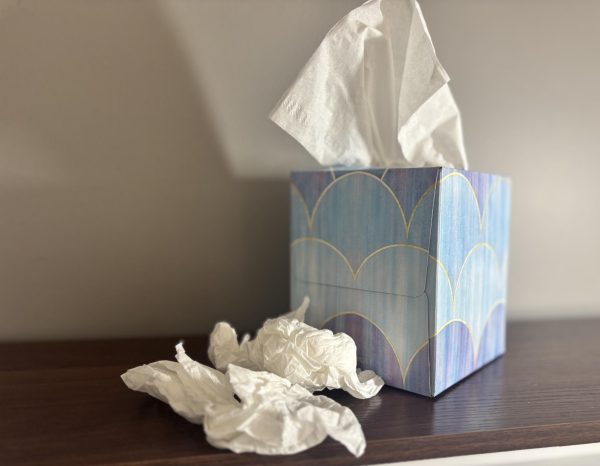
“…There are a lot of [over the counter medications] that you can take for allergies,” Delis explains. “Zyrtec is one of the more popular ones right now [and] Claritin… If you’re outside a lot or during that time of year, be sure you’re taking a shower before you go to bed so if there’s any pollen on your body, you’re not putting it in your sheets and then exposing your face to it… all night long.”
Even though medication can help significantly reduce symptoms, it is important to be careful with what you use. If used frequently and long-term, medication with Pseudoephedrine can cause issues with your heart and raise blood pressure.
“A lot of people will get the over the counter medicines that have the vasoconstrictors,” Massie explains. “The ones with the Pseudoephedrine in them, we don’t really recommend those on the long term. Using those frequently, you can raise your blood pressure. They can affect your heart.”
Even though seasonal allergy symptoms may not always seem like a big deal, they can really affect people, especially those with more severe symptoms.
Another Skyline student (‘29) said that they had to deal with “getting distracted in the middle of class because of [their] symptoms.” A third student of Skyline (‘29) said that they were not able to “breathe properly while training” during sports.