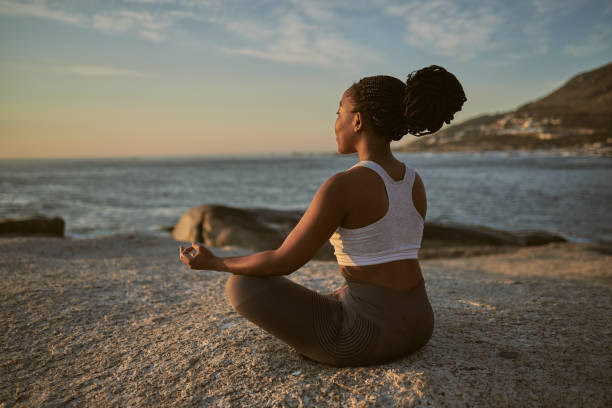
A new year often encourages people to set resolutions and chase big changes, but mindfulness reminds us that growth does not have to be rushed. Mindfulness means taking time to reflect on our thoughts, actions, and emotions allows us to move forward with intention instead of stress. By practicing mindfulness, we can appreciate the present while still working towards our goals.
Daily life can be so overwhelming; it’s so important to make time for ourselves. The more mindfulness you do, the more effect it’ll have on you. Try to give yourself the time needed to reflect and appreciate the present moment.
Here’s a guide on how to exercise mindfulness when entering a new year!
1) Mindful Breathing: Taking breaks throughout the day to focus on your breathing can help promote relaxation and clear your mind from everyday challenges. A study from a research group from Grant Medical College, shows that deliberately practicing breathing exercises slows your heart rate and can decrease your blood pressure (NLM). Breathing sends relaxation signals to your brain, making your entire body reach a state of calmness. Some breathing exercises include:

Belly Breathing: Inhale through your nose, allowing your stomach to expand like a balloon. Exhale slowly out of your mouth.
Pursed-Lip Breathing: Inhale slowly through your nose, then purse your lips almost like you’re blowing out a candle. Exhale slowly through your pursed lips, making the exhalation longer than the inhalation. Paying attention to the sensation of the breath entering and leaving your body can bring you a sensation of relaxation and tranquility.
Box Breathing: Inhale for a count of 4, hold your breath for a count of 4, exhale for a count of 4, then hold your lungs completely empty for a count of 4. You can repeat the pattern as much as needed. This simple exercise of mindful breathing can bring you back from stressful moments and bring a sense of peace to your mind.
2) Mindful Movement: Whether you’re going for a walk, doing yoga, exercising, or dancing. Physical activity is another technique of mindfulness. Mindful movement includes paying attention to what you are feeling in your body as you are moving. The physical activity doesn’t need to be intense, even just walking around your house can help relieve your mind. Movement becomes meditative
when you pay attention to every sensation. As you use this technique, you will strengthen your ability to reduce distress.
3) 5-4-3-2-1 Grounding: This technique focuses on your senses. It shifts your focus from internal thoughts to external thoughts.
5 – See: Spot and identify five things around you.
4 – Touch: Focus on four things you can feel.
3 – Hear: Listen for three distinct sounds.
2 – Smell: Name two specific smells around you.
1 – Taste: Make note of one thing you can taste.
Tapping into the 5 senses can encourage you to focus on your environment, your body, and what you are feeling.

4) No-Tech Technique: Everyone needs some time to disconnect from the overflowing stream of notifications. Some of the best activities for when we disengage from our screens include being in nature, reading, baking, self-care, taking up a new hobby. When we allow ourselves to have some quiet time, we create a space to reflect on our feelings and thoughts, we become fully present, and gives us the right environment to refresh ourselves.
5) Observing Thoughts: We frequently look at our thoughts as facts, especially when they are negative towards ourselves. In an effort to keep these negative thoughts from evolving into baseless beliefs, it’s important to approach your thoughts with compassion.
Start by embodying the perspective of an observer. Watch your thoughts arrive, watch them stay, watch them leave. But make sure you are only watching them, do not try to resolve them. Once you have acknowledged the thoughts and feelings, delicately redirect your focus on yourself and your breathing. If you are ready, continue with your day.
It may be helpful to look at these thoughts/emotions as leaves blowing in the wind or clouds passing in the sky. It’s important to remember that thoughts come and go.