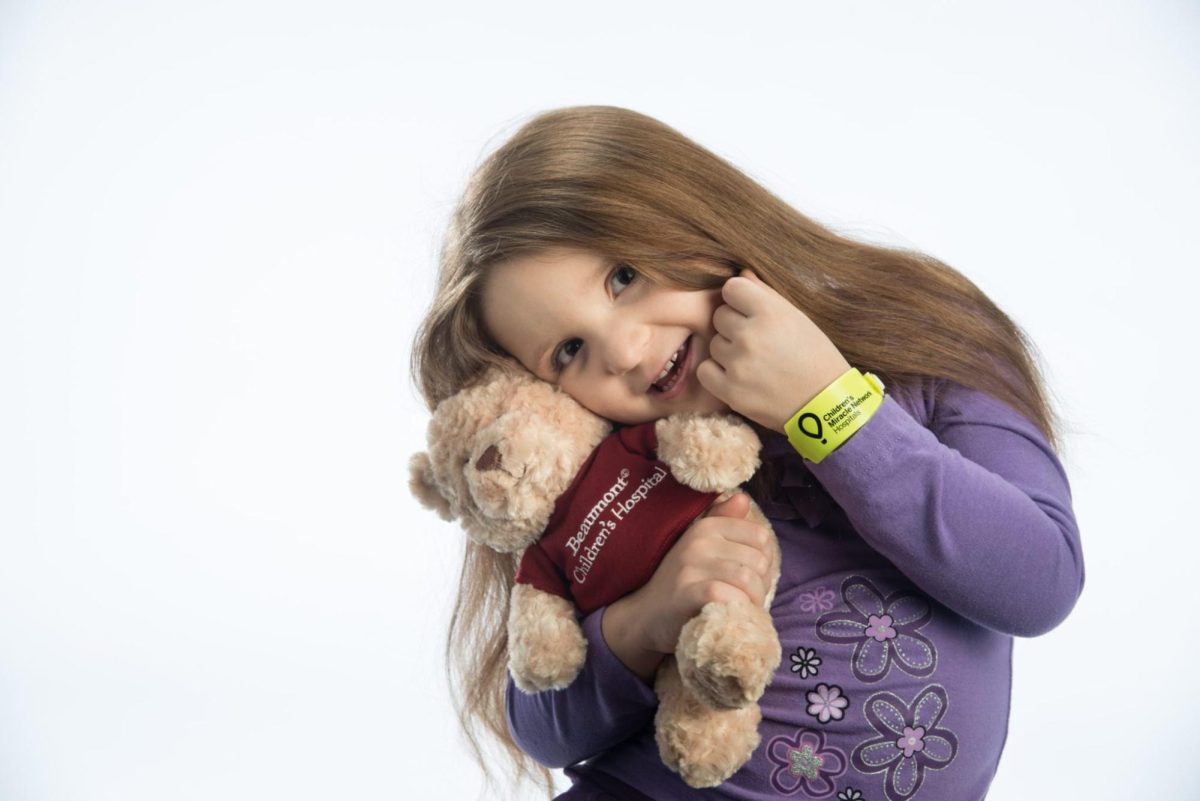
Jacobsen Syndrome is an extremely rare chromosomal difference that someone has at birth. People with it are missing part of their 11th chromosome (11q), which causes them to have multiple health differences. Twenty percent of people with Jacobsen Syndrome don’t make it past their second birthday. Jacobsen Syndrome can either have a noticeable impact or a mild effect on someone’s life.
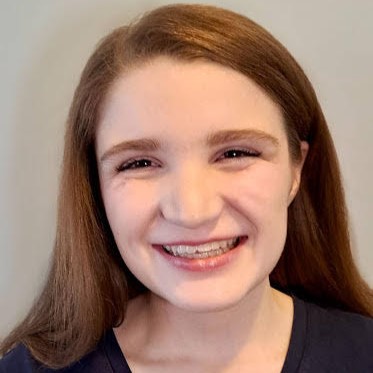
I, Lorraine Bromund (‘28), also known as Ellie, have one of the mild cases of Jacobsen Syndrome. I have multiple health differences including Paris-Trousseau, a blood platelet difference, ADHD, epilepsy, hypothyroidism, vitamin D deficiency, asthma, and my immune system is more ‘stubborn’ about working sometimes than others. I was diagnosed when I was three months old. I have had to have 11 surgeries, my most recent ones being a tumor on my toe in 3rd or 4th grade and a cyst on my face that developed two years later.
Jacobsen Syndrome causes me to sometimes not feel normal due to not being able to play contact sports when other people can and having to miss events in order to see a lot of specialists. I also can’t sit with my family during Mass at Christ The King sometimes when there’s incense, due to asthma.
Part of what makes people with Jacobsen Syndrome not feel normal is when we call it a “problem” or “disorder.” Whenever someone calls it that, it can make a person with Jacobsen Syndrome feel like they need to be fixed, when really, they don’t. When you look up Jacobsen Syndrome online, don’t trust what they say! Jacobsen Syndrome really isn’t as doom and gloom as they make it sound.
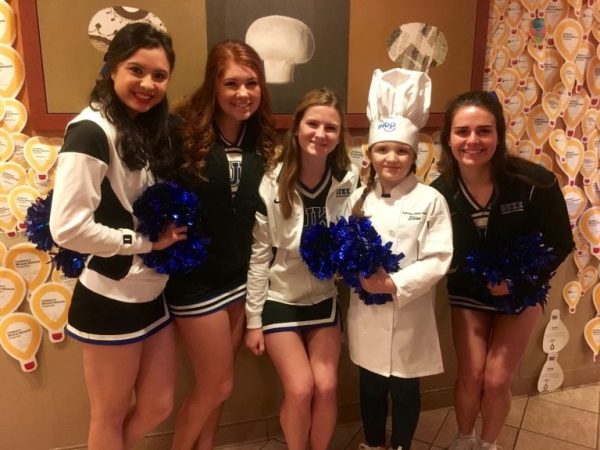
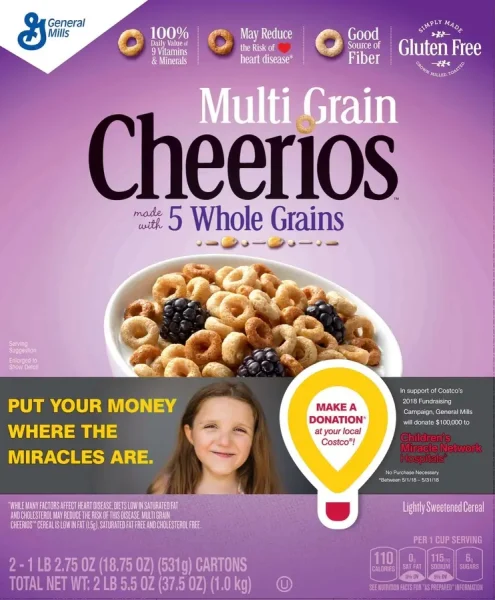
I have been able to do a few cool things because of Jacobsen Syndrome, like being the Champion Child for Children’s Miracle Network Hospitals (CMNH) when I was younger, being on the Multi-Grain Cheerios box at Costco in 2018, singing at Costco and Sam’s Clubs for CMNH, and meeting cheerleaders from Duke for being one of the top three in a kids IHOP recipe making contest for kids who go to Children’s Miracle Network Hospitals. I’ve been able to be on the radio and talk about it as well when I was younger.
I’ve also been able to go to Victory Junction (A Serious Fun Camp), every summer since 2nd grade. It’s a camp that makes me feel normal for a week because there are other people there that have some of the same or similar health differences . It’s such an amazing place to go.
Having Jacobsen Syndrome makes me look at the world in a different way than most people that I know. I’m very appreciative of being able to have accommodations at school and having amazing doctors near us at U of M. Jacobsen Syndrome has brought along many difficulties but has also made me feel closer to my family, friends and God. He, my family, and my friends are the main people that keep me going when things get tough.
Special thanks to Dr. Paul Grossfeld, our Chief Medical Advisor for 11q Research and Resources Group. Please donate to CMNH during Miracle Month which is this month.
Work Cited:
Mattina, Teresa, et al. “Jacobsen Syndrome.” Orphanet Journal of Rare Diseases, U.S. National Library of Medicine, 7 Mar. 2009, pmc.ncbi.nlm.nih.gov/articles/PMC2670819/#:~:text=About%2020%25%20of%20children%20die,the%20life%20expectancy%20remains%20unknown