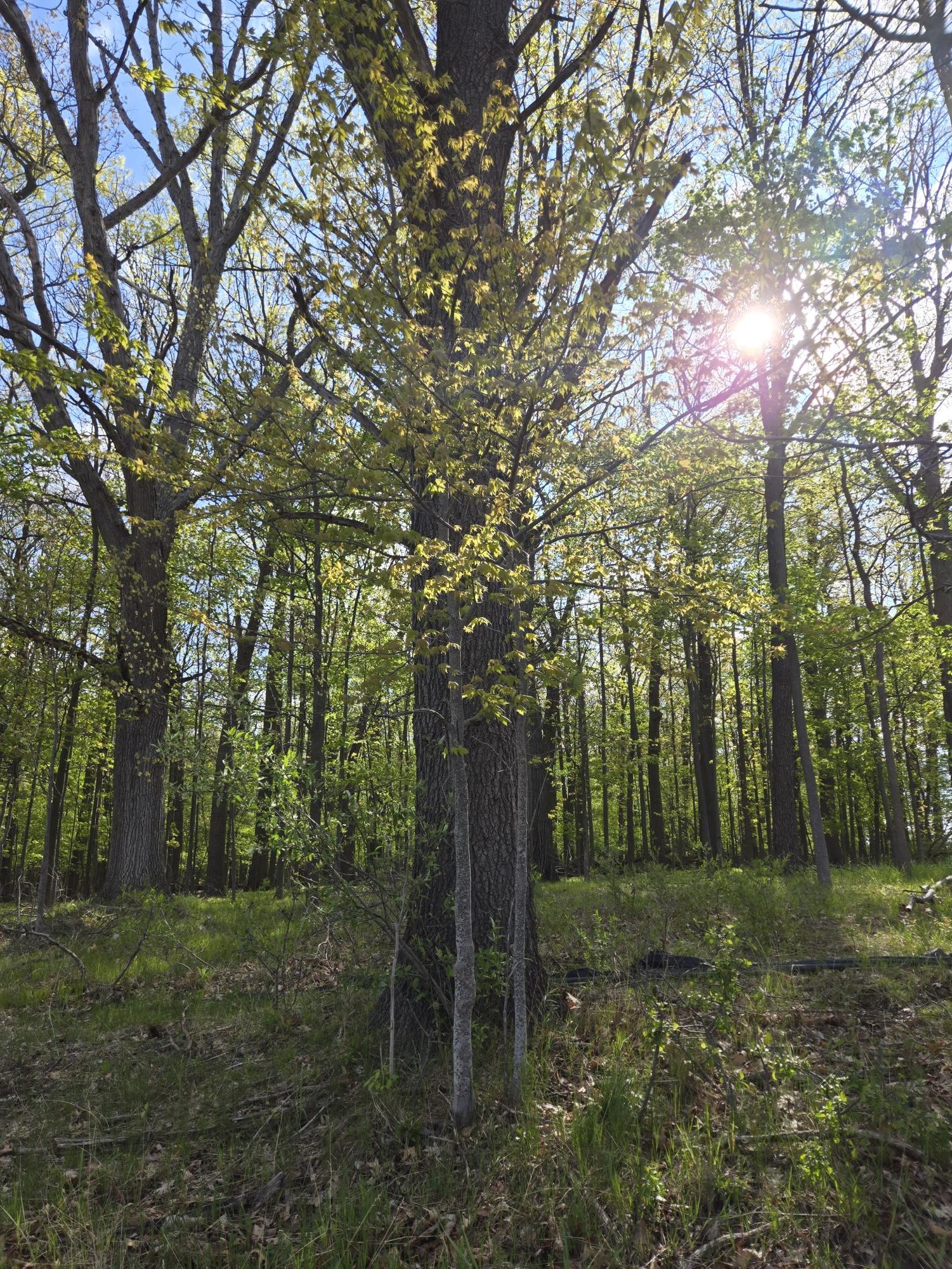
Most Skyline students have likely found themselves staring out a window during a lecture at some point in their high school career. The canopy of the forest on campus is especially nice to see in the warmer months of the year, when it becomes a thick sheet of green.
But like all pockets of nature in our largely industrialized world, its health has declined.
The Skyline natural areas are home to several species of invasive plants, in addition to oak wilt, which causes widespread destruction of surrounding trees and may have destroyed the natural areas in 2023 before being discovered. These species pose potential fire hazards and are dangerous to public health.
Action is needed, say several environmental experts, to avert future disasters and to preserve the natural areas for future Skyline students.
Invasive Species
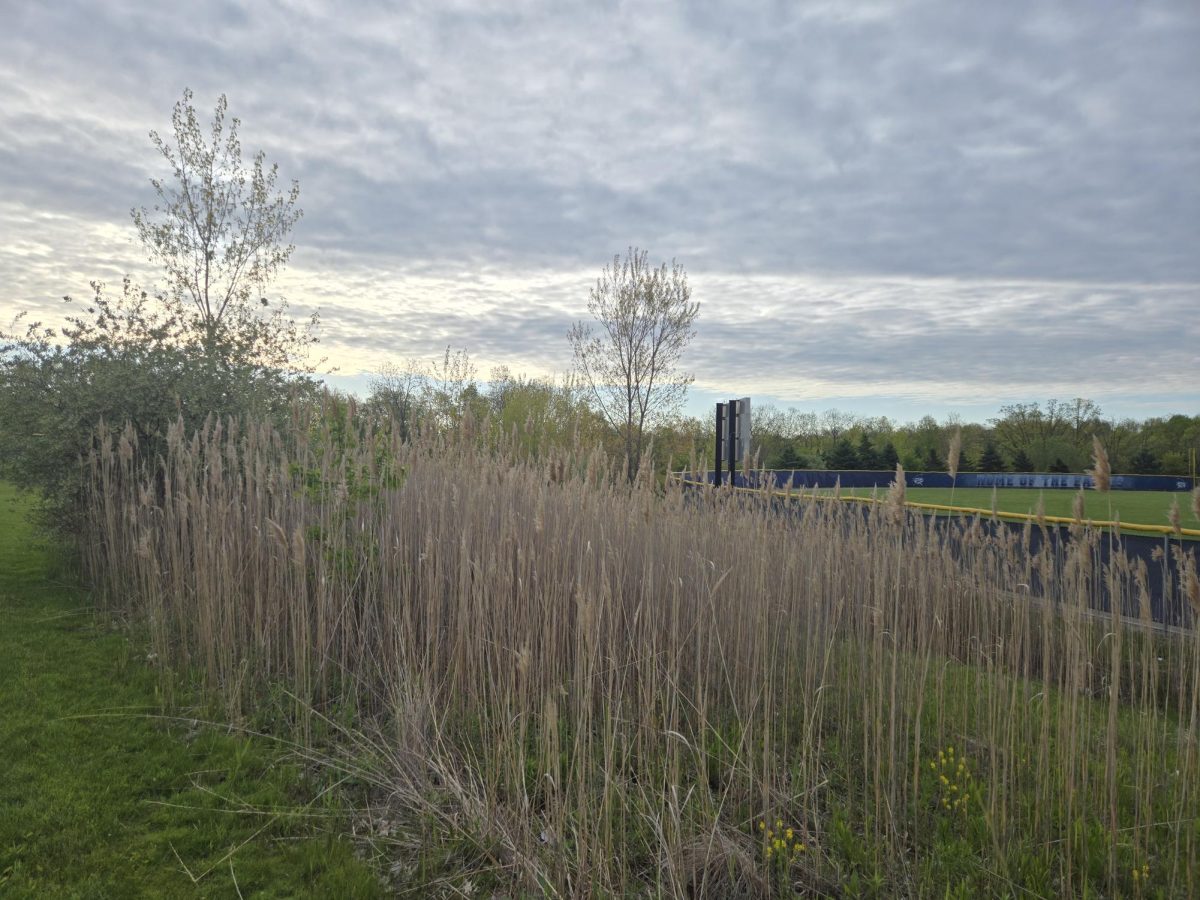
Professional environmental restorationist Mike Appel points out the existence of a plant known as Phragmities, or Common Reed. “In between the baseball fields and the tennis courts you can see prairie grasses and prairie plants that are in there, but those are being overtaken by Phragmites, which is an…invasive European grass.”
This invasive plant can be a fire hazard. When Phragmites burns, “it burns super hot…[It] looks like a tire fire when it’s actually burning, because it burns with such thick black smoke.”
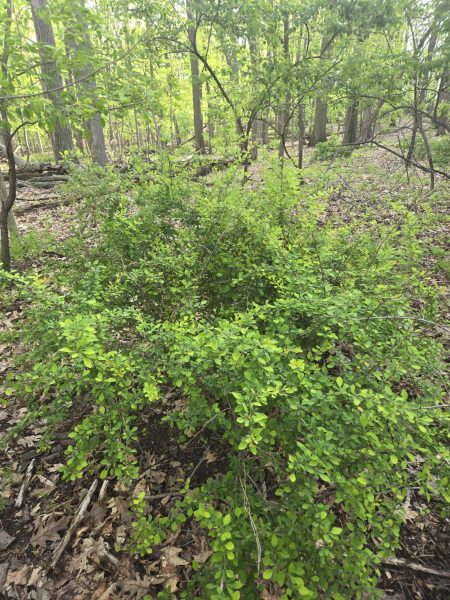
The list of invasives in the Skyline natural areas doesn’t end there. Appel notes the existence of Bradford Pear and Japanese Barberry. Barberry in particular has been linked to rising Lyme disease cases.
The spiky plant protects mice from predators, which allows their numbers to rise, growing the tick population. “An old mouse is six months old,” Appel says. “They’re basically growing and dying all the time, and they have evolved no grooming behaviors. So when the ticks get on the mice, the tick population goes through the roof. And with the mouse population through the roof, because there are no predators, that leads to a massive tick population.”
Other invasives include Autumn Olive, Buckthorn, and Honeysuckle, as many of us learn in Biology teacher Carely Bartholomew’s Michigan Botany course. “Invasive species are pretty tough to remove,” says Bartholomew. “So we have an issue where even when we cut them, they can still come back for several years unless we are applying poison…like a glyphosate. Roundup is what it’s called over the counter. You have to have a license to apply that stuff on a public property or business.”
Although these invasives are a real problem, Appel notes that the ecosystem “seems to be holding its own,” and that “it’s not so much the middle of the natural areas that has so much invasive species pressure, it’s the edges.”
This is good news for Skyline to hear. But unfortunately, the Skyline natural areas are being threatened by more than just invasives: there’s the Oak Wilt, too.
Oak Wilt Infestation
Oak Wilt is a fungal disease that spreads from tree to tree through connected root systems, and above ground across long distances on sap-eating beetles. Its discovery at Skyline started when Jacqueline Courteau, president and consulting ecologist of NatureWrite LLC, took a walk in the Skyline natural areas in the autumn of 2023 and noticed a tree missing all of its leaves.
“I looked up, and I could see that the canopy was pretty close to bare, that a lot of leaves had been dropped,” said Corteau. “And that’s one of the biggest signs, is if you see a tree during the growing season, during June, July, August, September, with green leaves dropping to the ground, that’s a really big clue.”
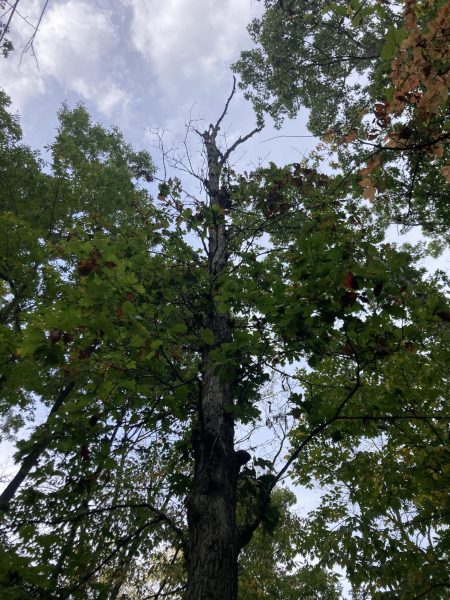
Fearing that it may have been infected with oak wilt, Courteau contacted certified arborist Julie Stachecki, who helped harvest a sample of the wood in person and paid for it to be tested by a lab.
The test came back positive for an oak wilt infection. “If a Red Oak becomes infected with Oak Wilt, it will die. There is no cure,” says Stachecki. “Once infected and showing symptoms, red oaks typically die in six to eight weeks.”
Only one tree was infected at that time, but Oak Wilt spreads both above ground via beetle vectors and below ground through connected roots, and is incredibly lethal to red oaks, which Courteau estimates “about 60 to 70 percent Red Oak” constitutes Skyline’s natural area.
Knowing the dangers, Stachecki and Courteau went out of their way to make sure the fungal infection was contained. They contacted Casey Warner, Advanced Placement Environmental Science (APES) teacher at Skyline High School, who then contacted the district.
From there, a district contractor came and cut the infected tree down. But because the fungus can spread through root systems, Stacheki had to hold a meeting to explain the correct containment method to the district.
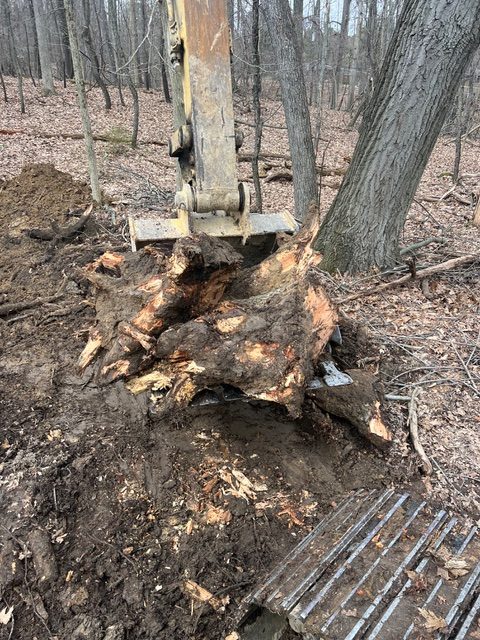
“The most effective way is by trenching five feet deep at a minimum in order to break those connected roots that are grafted together,” says Stacheki. After that, more district-paid contractors arrived and successfully quarantined the infection by removing the stump and cutting the roots.
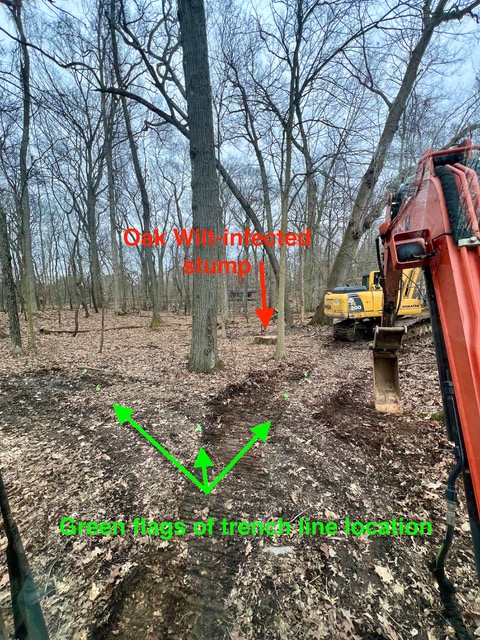
If it had not been for Courteau on that fateful day, the Skyline treeline would have toppled like dominos. “Oaks are the majority of mature trees in Skyline woods,” says Courteau, “and there are no tree seedlings or saplings waiting to become the future natural areas. Deer have browsed all the undergrowth. So if most oaks die, Skyline forest will no longer be much of a forest, but will have scattered trees and will likely fill with invasives like buckthorn, which are less browsed by deer.”
Stachecki also notes that the infection can still spread to nearby neighborhoods through root grafts, making this a problem for a much wider area than just Skyline. “The adjacent neighborhood and beyond, is home to many hundreds and possibly thousands of oak trees. I imagine that the adjacent neighbors would not like to have their trees under extremely high disease pressure.”
Call to Action I: Emulate the Pioneer Approach
Skyline could take a similar approach to maintaining its ecosystem as our neighbor, Pioneer High School.
Pioneer’s natural areas have undergone a complete transformation within the last 25 years, becoming a lush haven for amphibians and migratory foul since its time as farmland and a golf course.
According to Pioneer biology teacher Kristen Workman, student involvement is a key factor in maintaining the area. “The first time I take them into the natural areas, we play,” she says. “We learn how to make acorn whistles and little obstacle courses out of logs. I think without getting kids outside and invested in exploring these areas, there’s little chance of having it be an ongoing interest.”
Pioneer students participate in many activities, such as adopting a tree to study for the duration of the year, or harvesting and examining macroinvertebrates from nearby water.
Skyline’s botany and APES classes also offer chances to go outdoors, but Pioneer has these opportunities built into standard science classes. Students of all grades have the chance to interact with the outdoors without using up an elective or having to take an AP class.
There are also other efforts helping the Pioneer natural areas, such as Friends of Greenview, a local organization of neighbors who ensure the Pioneer Prairie is safe and healthy. “Every other year, they bring out like a herd of, five, six goats,” says Workman. “And the prairie hosts them in areas where there are invasive species. They eat poison ivy, they eat buckthorn, they eat all of the stuff you don’t want growing.” Workman states the Friends are responsible for controlled burns and the planting of native species as well.
Friends of Greenview also coordinates community efforts. “I know for sure the Boy Scouts worked on two projects with the Friends of Greenville last year too,” says Workman. ‘So it’s not just Pioneer kids. It’s really a nice community effort. And I think that would be something else to tap into for development of that area at Skyline.”
Call to Action II: The Skyline Salamanders
As reported in The Skyline Post’s previous coverage, the Skyline natural areas act as breeding grounds for salamanders in the spring. Taking Workman’s advice for stoking interest for the outdoors and applying it to restoring our salamander populations would be a way to restore the overall health of our forest.
Additionally, this restoration work could potentially give Skyline a new, unique sense of school pride and bolster interest in biology among students.
With the collaboration of teachers and management, Skyline students could study and create more salamander-friendly habitats, or collect surveys on salamander populations and practice creating reports and field journals. This could come in the form of an afterschool program, a class, or simply modifying biology classes that students have to take anyway.
APES teacher Warner says it’s possible for students to handle salamanders on their own as long as they’re careful. “They like to hide under like dead logs in particular or under like the bark. So you have to be really careful because you don’t want to squish them,” says Warner, “and you also don’t want to pick them up if you have any sort of lotion or anything on your hands….They breathe through their skin and if they absorb any lotion [it] would kill them.”
The total number of salamanders on Skyline’s property is unknown, but in Skyline’s first few years the Natural Area Preservation (NAP) had collaborated with Skyline to count the creatures every year, according to Warner. “They – for five years – had a grant to come back every spring. It was the first rainfall after it thaws. That’s when, supposedly, the salamanders migrate.”
Bartholomew is open to doing the surveys as an activity with students. “We haven’t done a full survey, and that is something that maybe we could think about doing in botany…both for the salamanders and for some of the trees.”
Why Fighting Invasive Species Matters
Meredith Holm, who is Michigan State coordinator for the U.S. Fish and Wildlife Service’s Partners for Fish and Wildlife Program, spoke with The Post on the role wetlands play in Michigan’s ecosystem, describing how they “act as kind of like our kidneys.”
“They filter out pollutants and contaminants,” Holm says. “They act as a sponge so they can hold water and that will decrease flooding across the landscape, and they’re important for wildlife like migratory birds, waterfowl, and insects. So all across the board, you know, without wetlands, we’d be in serious trouble as people and wildlife.”
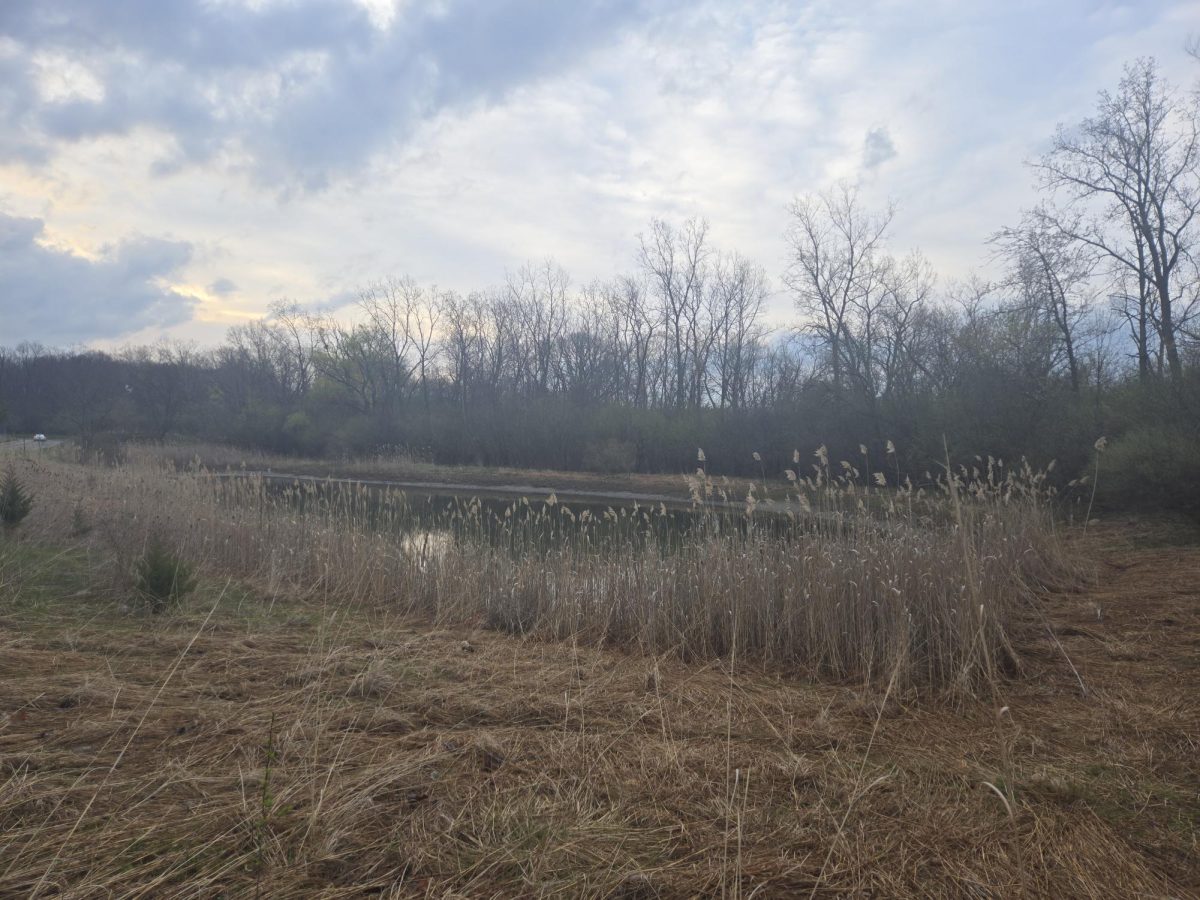
Additionally, Holm notes how natural areas have been lost all across the state. “Michigan has lost over 50% of our natural natural areas,” Holm says. “In coastal areas, it’s over 70%. Some more specialized natural areas like bogs and fens, it’s over 90%.”
Skyline and the district should realize the importance and educational opportunity that our natural areas provide. We, as a school should mobilize to become more involved in its preservation, and should look to external parties for support as well.
Students: if you care about conservation, try getting in touch with student-led organizations, such as the Skyline Environmental Sustainability club, or taking classes like AP Environmental Science or Bartholomew’s Botany of Michigan course.