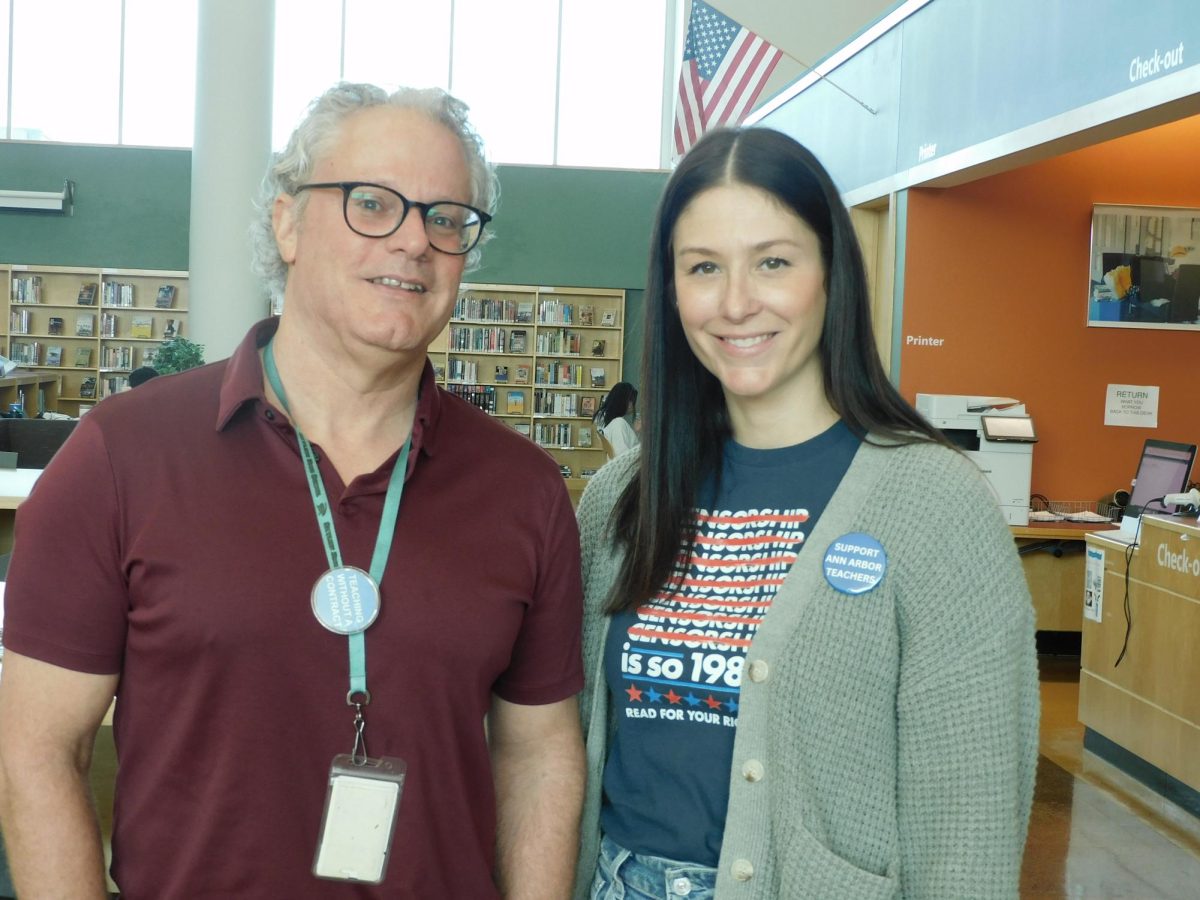
Frustration over pay, workload, and classroom conditions came to a head Tuesday evening after concerns over low salary increases, larger class sizes, and healthcare costs, restarting negotiations that could affect classrooms across the district. On Tuesday, April 27, Ann Arbor teachers voted down a tentative agreement with the district, sending negotiations back to the bargaining table after months of discussions.
The proposed agreement included a 1.5% salary raise, larger class sizes, reduced planning time for elementary teachers, and changes related to healthcare costs. Many teachers said the deal did not properly address their concerns.
“For teachers, this really felt like a slap in the face,” says AAEA Union Representative Megan Stark. “It felt like they did not value me, or the work that I put in here, or the work that I do outside of school, either.”
According to AAEA Union Representative Gabriel Rettaliata, negotiations between the union and district began earlier during the school year 2026. After bargaining stalled, both sides moved into mediation before the tentative agreement was presented to teachers for the April vote.
“After several rounds of mediation, we voted it down, so now we return back to bargaining,” says Rettaliata.
Many teachers who were interviewed by the Skyline Post said the proposed agreement did not properly address concerns about salaries, workload, and keeping teachers in the district long term.
“We have had stagnant wages in this district for like 20 years,” says MEA Member Organizer Monica West-Jones. “A 1.5% raise with today’s inflation rate is not a meaningful raise, it’s an effective pay cut.”
Some teachers said they would like to see larger raises spread out over several years instead of one small increase.
“I don’t need a huge 20% raise all at once,” says Rettaliata. “But we need moderate increases over time so Ann Arbor salaries can catch up with similar districts.”
Teachers also raised concerns about increased class sizes proposed in the bargain. The tentative agreement would have raised class size caps by three students across grade levels.
“How does that help you as a student?” says Stark. “It doesn’t. I can’t do my best work when I have a class of 36.”
West-Jones similarly stated that larger classes and reduced planning time could negatively impact student learning.
“I would not increase class sizes,” says West-Jones. “We know that this results in worse outcomes for student learning when teachers have more students to split their attention between.”
Healthcare costs became another major issue during negotiations. Teachers criticized language in the proposal related to pending healthcare contributions under pending Michigan legislation.
“Healthcare has become unaffordable for a lot of teachers here in Ann Arbor,” says Rettaliata. “We don’t want to see language that keeps pushing those costs onto teachers.”
Even with frustration over the rejected agreement, teachers said students are still their main priority.
“There’s no maliciousness on our side towards any students,” says Rettaliata. “But it’s important for teachers to only accept a deal that puts us in a healthy enough position to do our jobs well.”
Stark also raised concerns about how the now rejected agreement could affect whether teachers stay in the profession long term.
“The TA (Tentative Agreement) is not going to change how we teach,” says Stark. “But it is going to change for some people whether or not they choose to stay in teaching but they have a job to do, and they’re going to show up and do it. We are going to show up and do it no matter what. But at the same time, if that’s all the district can offer us, I know a bunch of teachers who are already looking at other districts to get new jobs for higher compensation.”
Teachers interviewed also said they hope future negotiations will lead to better pay, smaller class sizes, and stronger support for educators.
“My hope is that it ends with a fair proposal being put forth from the district,” says Rettaliata.