Warning: This story contains mentions of suicide.
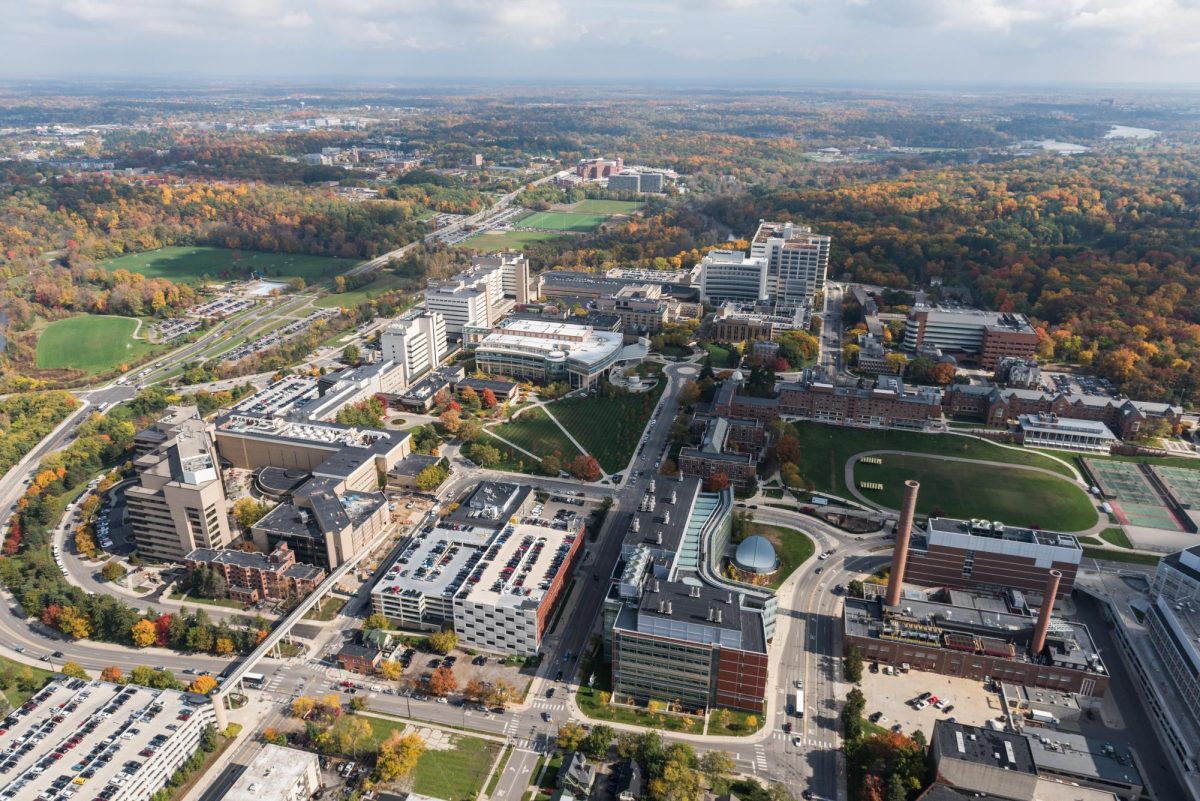
Throughout 2025, laws and regulations surrounding gender-affirming healthcare for minors have changed drastically. Both the University of Michigan and Corewell Health, two of the largest healthcare providers in Michigan, have halted gender-affirming hormonal therapy for people under 19.
“Corewell Health, which is one of our biggest healthcare providers, announced that it was ending trans healthcare as a result of a [governmental] order [in February 2025],” says co-lead teacher for the Skyline Health and Medicine Magnet Program, Monica West-Jones. After they received a lot of pushback, “the company reinstated care.” Then, on August 25, 2025, “the University of Michigan chose to end transgender-affirming care…Corewell Health [decided] to follow suit.”
A Michigan Medicine press release on August 25, 2025, states that care was ended due to the threat of federal prosecution. “The University of Michigan, including Michigan Medicine, is one of multiple institutions across the country that has received a federal subpoena as part of a criminal and civil investigation into gender-affirming care for minors. In light of that investigation, and given escalating external threats and risks, we will no longer provide gender-affirming hormonal therapies and puberty blocker medications for minors.”
These changes have been contested, with state officials including Michigan Attorney General Dana Nessel speaking out. On August 26, 2025, Nessel released an open letter stating that “the announcement from the University of Michigan that they will no longer provide their transgender patients with all of the healthcare options available is shameful, dangerous, and potentially illegal.”
The specific law that calls the legality of these changes into question is Michigan’s Elliot-Larsen Civil Rights Act, which says that you cannot discriminate based on “religion, race, color, national origin, age, sex, height, weight, familial status, or marital status.”
According to West-Jones, “because these health care providers are specifically… [refusing] gender-affirming care for trans youth and still providing gender-affirming care to cisgender youth, they are violating the Elliott-Larsen act.”
As these new regulations affect people under the age of 19, many citizens are concerned about current and future infringement upon the rights of adults.
“People who are legally adults are now having their care either ended or won’t have access to making actual decisions for themselves, which they have the legal authority to do,” says West-Jones.
Many people rely on hormonal treatment and other forms of gender-affirming care to feel comfortable in their own bodies and identities.
“Being comfortable in your own body is going to have a big impact for students during this time, as you’re figuring things out,” says leader of Skyline’s GSRA Shelby Eaton. “You don’t feel like you belong in the right body, and then on top of that, you’re trying to figure out science class. It’s a lot, and it’s really important that we support our students through that process and through that transition, and not just transition, like physically, but the transition from childhood to adulthood, and that includes everything. That’s just part of growing as a person.”
The discomfort of going through puberty as a gender that one may not identify with can compromise mental health and make it difficult for students to succeed in school.
“We could see things like attendance rates dropping, students participating less in class, because they feel this huge hit to their confidence,” says West-Jones.
Gender-based bullying and discrimination is something that many people going through gender transitions deal with.
“I definitely have students who struggle because they are trans, [and] we have bullying at this school. You have teachers not always calling students by their names or using their correct pronouns,” says Eaton. “That’s gender-affirming care as well. It’s not a medical thing, but it still affects them emotionally and psychologically.”
Advocates are raising awareness that access to gender-affirming care can be lifesaving.
“For trans and non-binary students, [gender-affirming care] is suicide prevention,” says Eaton. “It is, and it’s just calling someone by their name, just using the correct pronoun, respecting who that person says they are. I think sometimes people don’t take it as seriously as it is. We look at how many trans people end up unaliving themselves, or end up hurting themselves, or society hurts them… and by protecting gender-affirming care and protecting our trans students, we are actively promoting suicide prevention.
“Just – protect trans kids at all costs,” says Eaton.