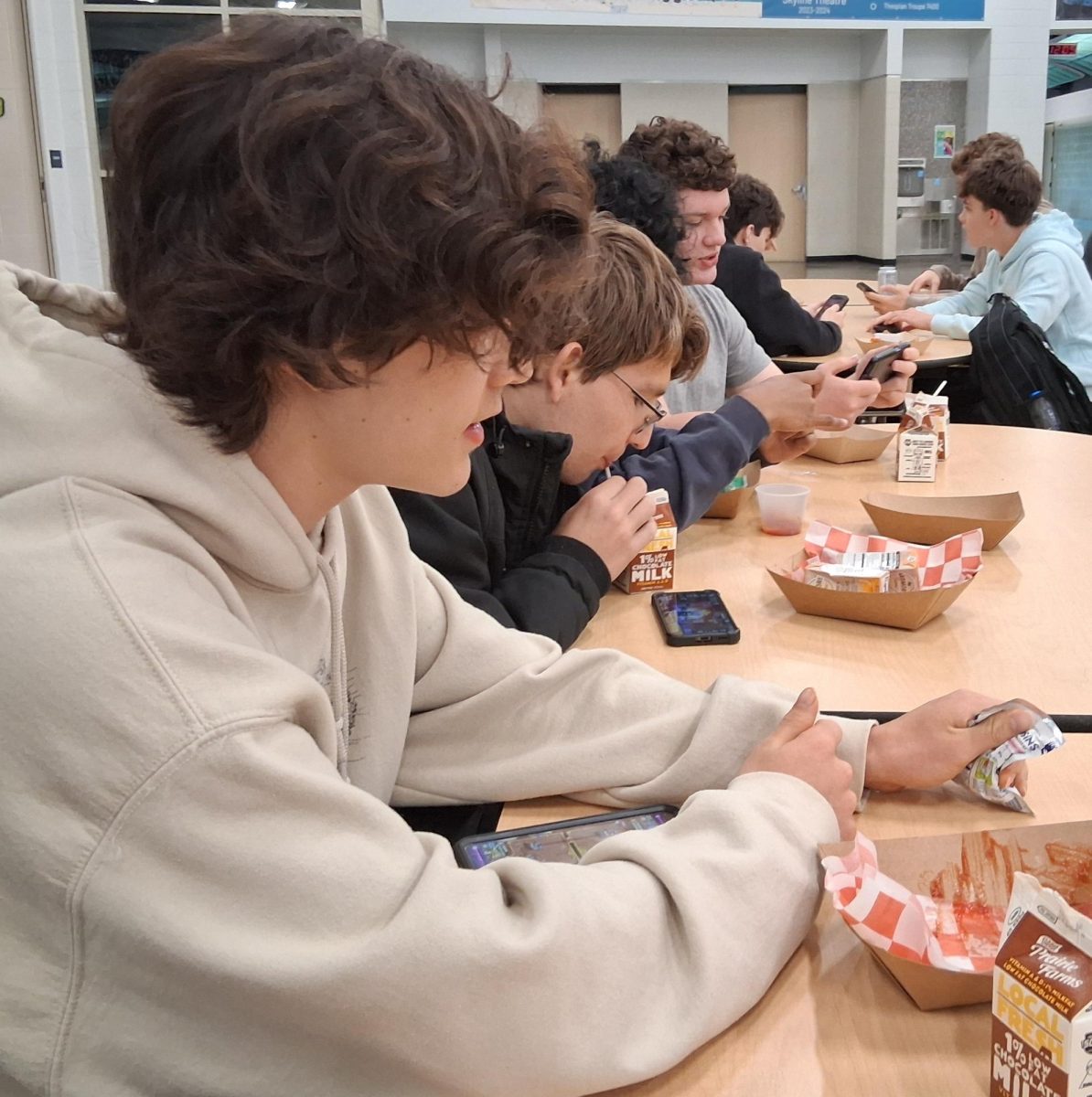
School lunch has always been a staple experience, but over the years, the menu has evolved and shifted due largely to the United States Department of Agriculture’s nutrition guidelines. Some of the changes have been popular, while others have left students disappointed.
“I was disappointed about them taking out the quesadillas, which I really liked,” said Marco Rogers (‘26). “I also wish they would bring back the subway station… where you can personalize your sandwich.”
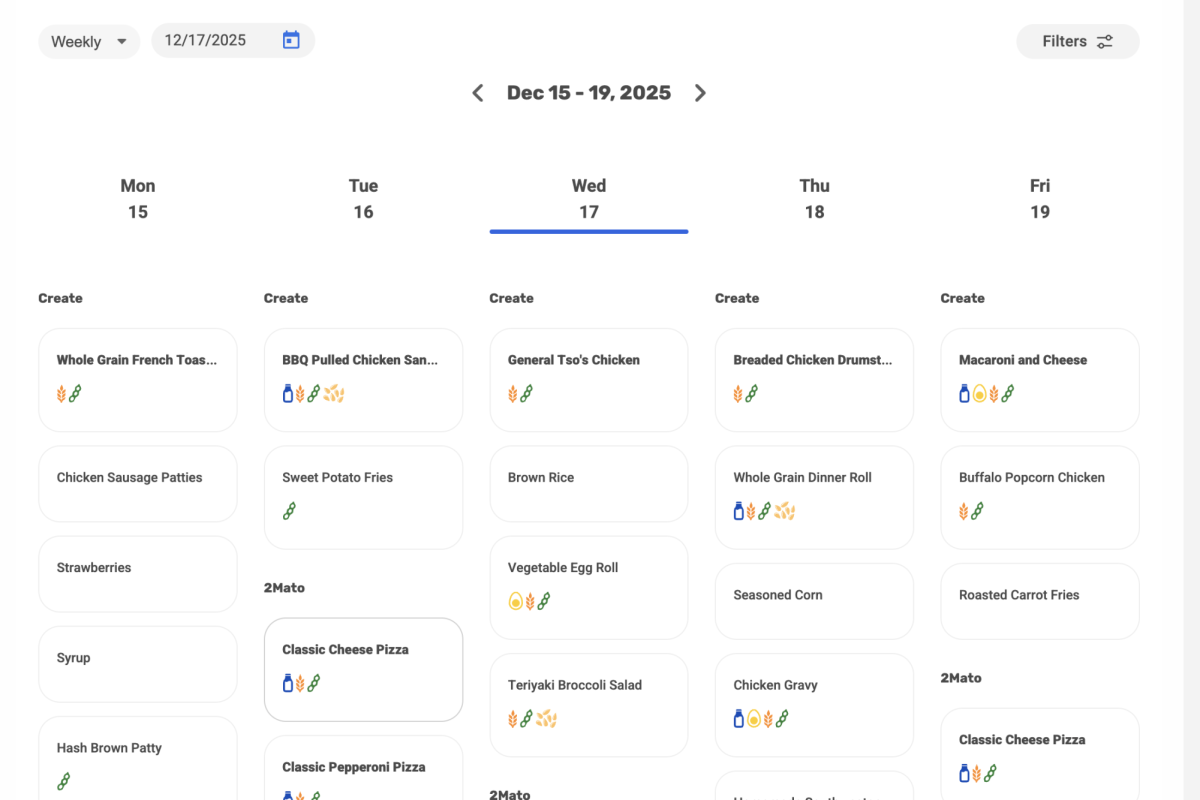
Some of the changes that have been made between years or at various points throughout the years by the Skyline cafeteria to better adhere to the USDA guidelines have been the removal of the customizable sub station and the addition of another nacho line, where you can customize your own nachos with options such as beef, chicken, beans, rice, and cheese instead. Despite the changes to the Skyline cafeteria, students still have many choices that often rotate every day. Options such as nachos remain a popular choice for students daily, but students have a variety of favorites.
“My favorite thing to get for lunch will have to be a mac and cheese, it’s so creamy and delicious,” said Rogers. “But, they don’t have mac and cheese every day, so my go-to is nachos.”
Public schools are required to follow USDA nutrition guidelines, which require the inclusion of fruits, vegetables, and whole-grain items. Some popular items are often removed or changed to meet health standards, and recipes are constantly reformulated to be healthier, allowing people who are trying to stay healthy to have good lunch options.
“Usually at lunch I get the nachos because usually it’s the healthiest option, you can customize it, and it’s there every day,” said Max Pinaud (‘26). “I liked how they created 2 lines for nachos to streamline it better.”
Many students also have their own ideas on things that the Skyline Cafeteria could implement and how lunch can be improved here at Skyline.
“I would like to see the nachos be transformed into a more Chipotle-style option with different meat and better options,” said Pinaud.
Lunch experiences can also differ greatly depending on where students come from, offering a broader perspective on Skyline’s cafeteria.
“In Brazil, we have like, two lunches, one is like shorter, and the other is like one hour,” says Brazilian exchange student Vinicius Castilho Dugaich (‘27). “The seasoning [of the food at Skyline] is very good, and they have like, different things like to eat, so every day, you can decide what you’re doing.”
However, any changes made to the food must follow the USDA standards to receive federal funding. As a result, cafeteria staff must balance student preferences with nutritional requirements, limiting the flexibility of the menu and the voice that students are able to have. An adaptation created by the Skyline cafeteria is the options that allow students to customize their plate within the guidelines. Moving forward, many students hope the cafeteria will continue to find creative ways to offer healthier options while still keeping lunch enjoyable.