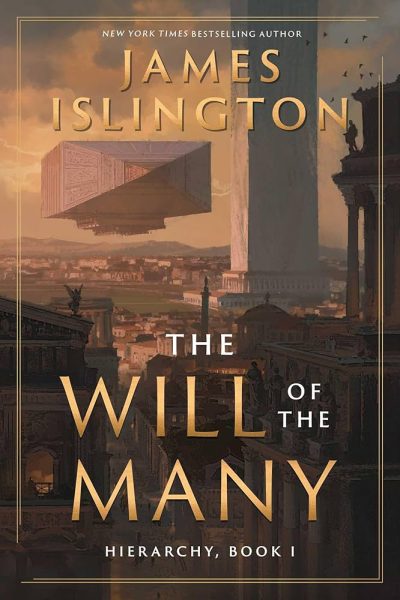
In this thrilling Dark Academia read, James Islington drops readers into the Catenan Republic – often just referred to as the “Hierarchy” – a fictional society based on Ancient Rome with a unique, stratified caste system.
Nearly all citizens are forced to cede a portion of their mental and physical energy (known as Will) to the classes above them in the hierarchy. The higher one’s rank, the more Will one receives; the lower one’s status, the more of oneself must be surrendered.
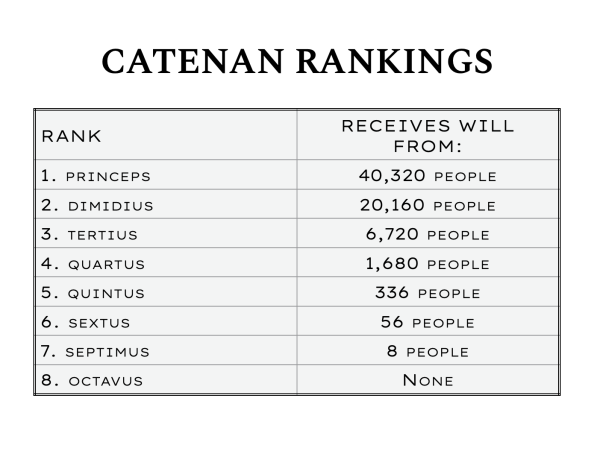
One of the novel’s greatest strengths lies in its meticulous and creative world building, and the setting is unlike any I’ve read about before.
Vis, our wily protagonist, is first introduced to us through one of the lowest tiers in Catenan: an orphan working as a guard in the ruthless Catenan prisons. He has no official status – not due to a lack of power, but because he refuses to cede (or give any of his will).
But Vis is not who he claims to be.
He’s hiding the fact that his name isn’t really Vis and that he’s far more than a penniless orphan scraping by. His true identity is Prince Diago of Suus, the last survivor of a royal family executed by the very empire he now serves.
When Vis catches the eye of a powerful, high-ranking senator named Ulciscor, he is ordered to infiltrate the elite Academy – an elite institution that trains Catenan’s future leaders – in exchange for his adoption. As Vis rises through the ranks of the Hierarchy and is drawn into the upper echelons of Catenan society, he has to grapple with the fact that every triumph of the people around him paid for the destruction of his country.
What truly elevates the story is its rich ensemble. As the majority of the book is set in a school, Vis is surrounded by a wide range of sharply drawn characters, most of them hostile and all hiding their own secrets. Even the minor characters have unique, complex narratives, and I never got the feeling that anyone existed just to prop up the protagonist. The Academy (and largely the Hierarchy as a whole) is a dog-eat-dog world, where the only aim is to rise to the top, even if you have to push down others to get there.
Yet even as Vis enters the Academy with this mindset, he emerges with close, lifelong friends.
That said, the novel is not without its flaws. Vis, while being a decent lead, is overpowered from the start. The ‘hidden identity’ trope is absolutely a clichè, and a lot of his success is solely because of his princely training. This is remedied some by his having to endure a brutal training regime by his new mentor before he attends the academy, but it would’ve been nice to see him fail some more and explore his weaknesses further.
Nevertheless, it’s a clichè that was done tastefully. Islington makes a point of showing how connected Suus is to the Hierarchy, continually reminding both Vis and the reader. When Vis meets a loyal advisor from his fallen homeland and has to pretend to not recognize him, it’s devastating and heartbreaking to read.
In the background, Vis investigates the mysteries of the Hierarchy, including the unresolved and suspicious circumstances surrounding Ulciscor’s brother’s death. This plot is incredibly fascinating, and it kept me on my toes the entire book.
As a dark academia fanatic, this book more than scratches my itch for that gothic-library-academia setting while also incorporating bouts of gripping action and mystery.
This book is uniquely noteworthy, and it hits all of the tropes I love so dearly without being overly repetitive.