With the rise of artificial intelligence, Ann Arbor Public Schools has been implementing new measures to try and combat cheating. These measures include secure testing platforms, such as the LockDown Browser and training and tools for teachers on detecting AI in student writing and other work.
The LockDown Browser is a secure testing platform used for exams. When students take an exam using the browser, it locks their computer screen, making them unable to open other tabs, search the internet, or access any outside material.
Teachers and students report varying experiences with cheating in their classrooms.
Cheating appears differently across subjects. “There are different levels for sure, but I believe it occurs in all of them,” says Lead Skyline math teacher Jeff Oleksinski.
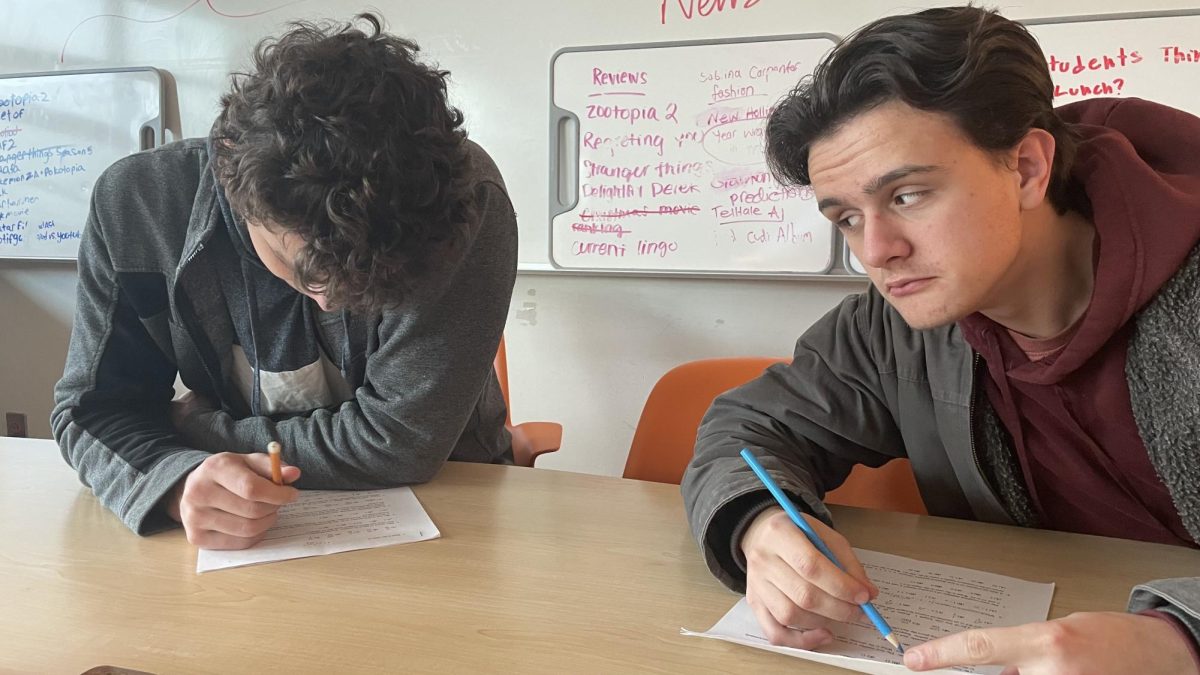
Some of the cheating occurs in process assignments, where the LockDown Browser is not used. Oleksinski describes this as “micro cheating,” which is widespread sharing and copying of homework and other process work. “There’s lots of micro cheating,” Oleksinski says. “I think students don’t even realize some of it is cheating anymore.”
Students have also confirmed seeing widespread micro cheating. “I see people in AP Physics using AI to do their process work,” says John McCleskey (‘26). “I see people do it fairly often – at least once or twice a day, sometimes even three.”
There have also been instances of more significant cheating. “I’ve seen students sharing test material between classes,” says Oleksinski.
“The issue isn’t just that students are cheating. They’re actively ruining their chance at learning,” says Lisa Phillips, who teaches Spanish at Skyline.
Teachers say students might not completely understand Skyline’s grading system, where they can achieve mastery without cheating on tests. “It’s disappointing how many students try to cheat, especially since Skyline’s grading policy allows for retakes up to 80 percent, even 100 percent in some classes,” says Phillips. “The whole point is for students to actually learn the material, it’s okay if it takes some extra time or extra support to reach mastery.”
Oleksinski says Skyline’s emphasis on second chances may also reduce deterrence for students. “We believe in second chances at Skyline,” Oleksinski says. “But I think it can make cheating more tempting when the consequences aren’t that harsh.”
Teachers emphasize that cheating ultimately harms students, regardless of whether they are caught. “The whole reason we’re here is to learn,” Oleksinski says. “Even if you don’t get caught, cheating will just stunt your own growth and you’ll know it when you take subsequent courses.”
Some students suggest pressure to earn high grades plays a larger role than school policy. “People at Skyline have a standard for themselves to get an A,” says Teagan McCallion (‘26). “If there is cheating, I don’t think the school can do much more than help students fully understand the curriculum.”