Note: to encourage student honesty and protect respondents on this sensitive topic, The Skyline Post has anonymized all survey responses.
When was the last time you asked an AI chatbot for help? Maybe you were stuck on a homework problem, or wanted to speed up your math calculations.
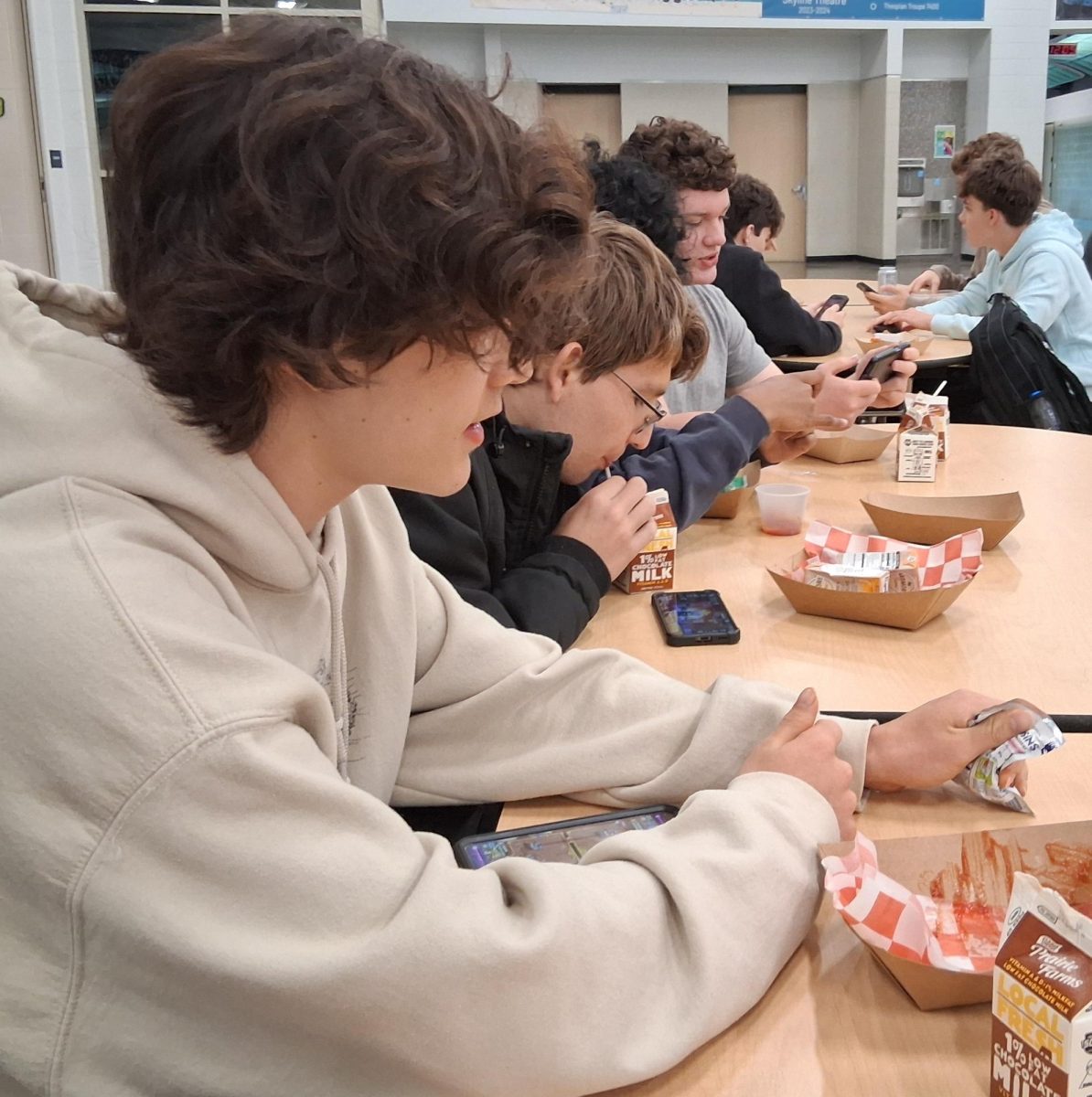
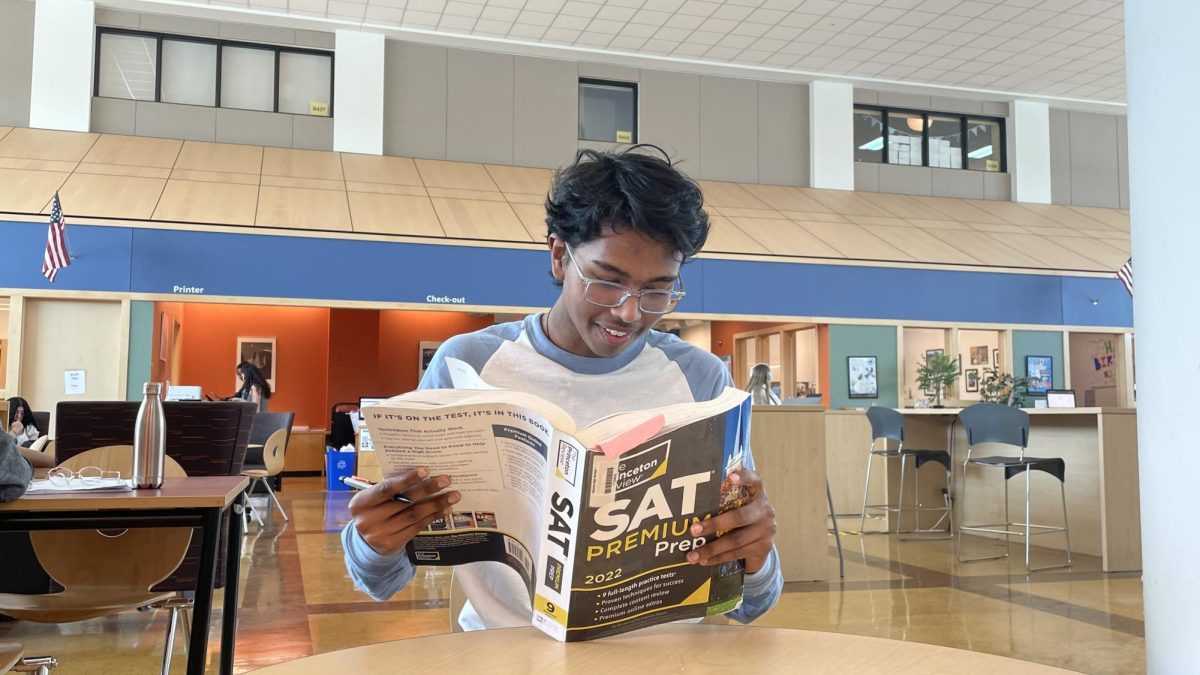
Let’s face it, a lot of students (and staff) at Skyline use AI for one reason or another. In fact, according to a survey sampling 70 current Skyline students, 79% say they’ve used an AI chatbot such as ChatGPT.
The majority of students affirm that AI is helpful to them
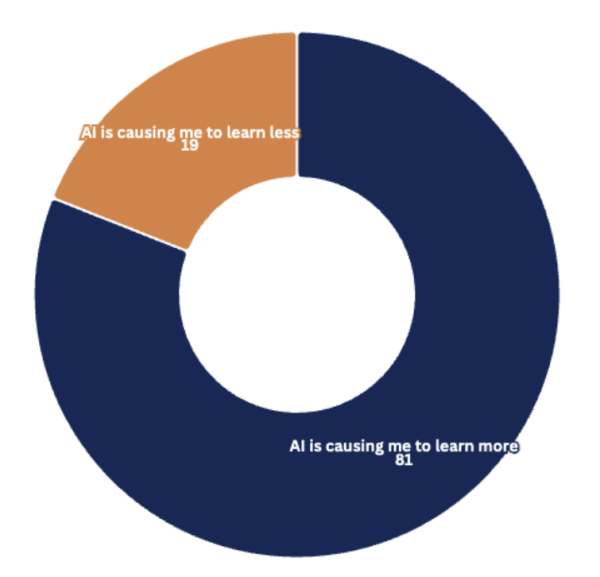
Most students who responded to the survey claim that AI is improving their education.
“I use AI to clarify things that I need a little extra help with in class and to help brainstorm assignments for school,” one student says. “My most common use for AI is for it to just give me brainstorming questions to ask myself.”
Some students use AI for non-school activities. “I sometimes use AI at home, never to do things for school because I don’t really like that people do,” another student says. “I never use the AI’s ideas because that would be copyright infringement.”
But while AI is a convenient tool and quick helper, there are also unforeseen consequences that affect the daily lives of students and staff.
A smaller fraction of survey respondents claim AI misuse is common
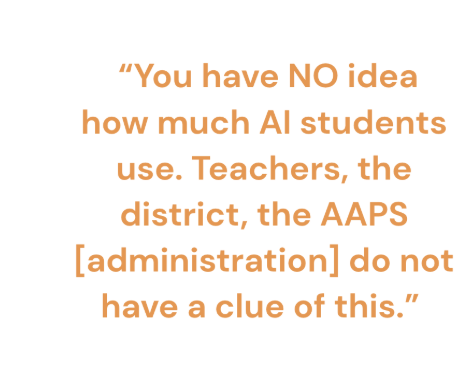 While the majority of students who responded to The Skyline Post’s survey deny using AI to write for them or provide answers, several students claim otherwise: “I see people using AI for essay[s], class debates, short answer questions, multiple choice questions, and presentations every day,” one student says. “Math, English, Science, History, Business, Health, and Computer Science, there is no exception.”
According to the same student, the use of artificial intelligence goes widely unchecked at school, allowing students to use it however much they desire. “You have NO idea how much AI students use,” the student says. “Teachers, the district, the AAPS [administration] do not have a clue about this. Of course, AI can be a good learning tool, and it is a very advanced technology that we all have to know about. But students just don’t use it that way. We are too dumb to recognize that fact and control our usage. Using ChatGPT is the default in class among students.”
Other students bring up ethical concerns around interacting with AI chatbots. “I think student use of AI is usually for cheating or to find easy ways to skip out on assignments,” a student says. “I think the use of AI shouldn’t be allowed because it usually causes more harm than good. The use of AI isn’t very ethical because AI usually hurts learning instead of helping it, and [AI] is built off the stolen work of writers, artists, and other creative jobs.”
“I see it most in my math class,” says a third student. “When we’re given work time, and people get stuck on the questions, instead of asking the teacher, they turn on ChatGPT and take a picture of their work, and just put it in. Then they just copy the answer instead of actually learning how to solve the problem.”
Teachers express concern that AI’s negative impacts outweigh the positive impacts
Many teachers at Skyline are concerned about how AI affects students’ learning. “I think what concerns me most is that students are using AI to shortcut their education,” says Annie Blais, Journalism and English teacher. “They don’t understand that the product that they’re supposed to be working towards is not an A or a right answer or a great paper. The product of your education is your brain. Your job as a student is to train your brain for the future.”
Blais also points out the rising importance for students to be able to analyze information by themselves in our technology-reliant world. “The other thing I worry about is with the rise of fascism around the world and threats to democracy,” she says, “I really don’t think this is the time that people should be giving over their critical thinking and creative faculties to AI.”
While teachers recognize that artificial intelligence can be used for good, many students are – sometimes unintentionally – having AI do the work for them. “I think a good use [of AI] would be if you have questions about something that you’re working on,” says Casey Warner, who teaches Biology and AP Environmental Science. “There are a lot of resources available that can… put you in the right direction. The problem is if it’s doing the thinking for you, and that’s unfortunately what a lot of students are doing. I don’t know that students are even aware; they might think they’re using it for good, but it’s actually doing the thinking for them – and so they’re happy they got the right answer, but they don’t know how they got to it.”
Additionally, Warner has seen an increase in students trying to cheat with AI. “When it comes time to demonstrate that knowledge on some other kind of assignment, like a test, then they can’t,” Warner says. “Then they feel stressed, and they either open up Google Lens or take screenshots of test questions and put those into ChatGPT, and get answers that way. Obviously, those things are not allowed, and they threaten the integrity of the test, but then also a student isn’t demonstrating mastery.”
The local environmental impacts of expanding AI
Along with the cascade of impacts on students’ learning, AI’s increasing popularity is exhausting finite resources across the nation and in our own community. “[AI] Data centers are being built all over the country at a pretty rapid rate,” says Alexis Blizman, J.D., Legislative and Policy Director at the Ecology Center of Ann Arbor. “Michigan is starting to build them, and there are several proposals in the pipeline to meet the demand.”
Data centers are necessary to train and run AI chatbots such as ChatGPT, and they require massive amounts of limited natural resources, including energy and water. “The question is, how are the utilities gonna be able to meet that [demand]?” Blizman says. “If the data centers are all powered by renewable energy and storage, that may be okay from an energy perspective. But with the rapid building of these centers, a big concern… is that this situation is going to give utilities the ‘off-ramp’ to invest in fossil fuels and new gas plants.”
In 2024, researchers at the University of Massachusetts found that training a large AI model can release 626,000 pounds of carbon dioxide into the atmosphere.
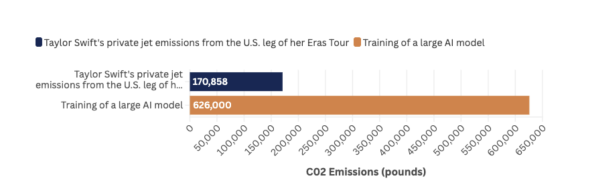
In a study by Greenly, Taylor Swift’s jet travel during the U.S. leg of her Eras tour is estimated to have emitted 77.5 tonnes of carbon dioxide (170,858 pounds). While environmental impacts like celebrities’ private jet use are often more well-known, AI is rapidly driving climate change and greenhouse gas emissions.
Unfortunately, it’s not just the creation of an AI model that consumes energy. Each time a query is run through an AI chatbot, more energy is needed to complete the interaction based on how many parameters the model has. As a research paper in the MIT Technology Review puts it, parameters are “essentially the adjustable ‘knobs’ in an AI model that allow it to make predictions… More parameters generally mean better answers, but more energy is required for each response.”
While the exact numbers are not known, the MIT Technology Review article says that the current model for ChatGPT (4) is one of the largest AI models out there. Their estimates show it may have over a trillion parameters.
In addition to the energy concerns around data centers, there is a growing discourse about how Michigan residents’ lives will be impacted. “Another concern is that these costs are going to be pushed onto residential ratepayers,” Blizman adds. “Michigan has some of the most expensive utility costs already, so with the [new] data centers, it could increase costs even more.”
Emerging research on AI and data centers has already brought attention to these concerns, but there are likely many other negative impacts that remain to be discovered. “As these data centers are built, there are concerns about air pollution, water pollution and usage, and even noise pollution,” Blizman says. “How close they are to people, where they will go, and [how] they will impact wildlife.”