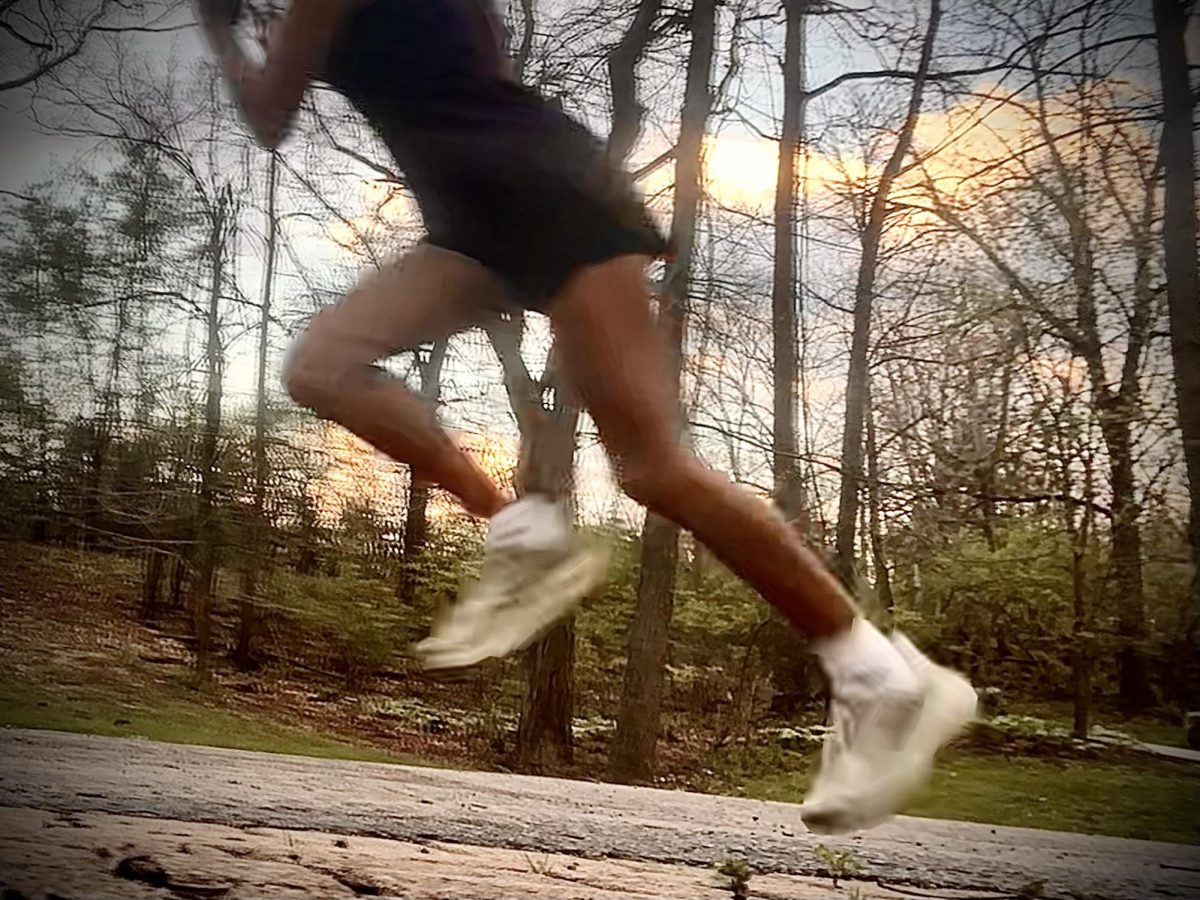
If you’re a runner, you may have experienced a strange numbness in your whole body when sprinting at the end of a race. This can be confusing and may worry you. This occurrence is due to exercise-induced hyperemia. For many runners, hyperemia begins at the end of a race with their legs feeling strangely inflated. As they then continue to run, their body goes completely numb.
“At the end of a race, usually, your legs start to feel full of air, kind of inflated,” Track and Cross Country runner Rohan Patel (‘29) says. “And then, eventually, as you keep running, you just stop feeling anything. And it kind of feels like you can’t control your legs.”
According to the National Library Of Medicine, When running, your muscles need much more oxygen than usual, so your blood vessels dilate so blood cells can be circulated faster through the body, delivering oxygen to your muscles. As running becomes more intense, such as during a sprint, your vessels will dilate rapidly. This is why your legs may feel inflated, especially when your blood vessels are already dilated from previous races. As they dilate, blood vessels will put pressure on your nerves, causing temporary numbness.
“As I understand it… that increased blood flow in the dilation of your blood vessels can cause some pressure or put pressure on the nerves,” Biomedical science teacher Dusti Vincent said. This “can cause some temporary numbness.”
Despite how strange it may feel, hyperemia is not something to be concerned about. It is just a sign your body is working hard.
“I think for most people, it’s just something that happens, and it goes away,” Vincent says. “Like you’re going to rest, you’re going to take some recovery steps, or whatever it is that you do to get your body to recover from an intense activity, and then eventually you’ll feel normal again.”
Even though hyperemia alone is not dangerous, if you experience abnormal muscle shaking or other unusual symptoms, that may be a warning sign of something more serious. It is important to take note of these symptoms and seek professional medical advice if needed.
“I think it’s something to take seriously if it goes beyond just numbness.” Vincent says. “Like numbness that doesn’t go away, numbness accompanied with tremors, convulsions of your muscles, feeling lightheaded, or even nauseous. All of those things can be signs of a bigger problem.”
For some runners, hyperemia may reduce performance during a race.
“I think at the end of a race, it might make me run a little worse and subconsciously slow [me] down,” Patel says.
If hyperemia impacts you negatively, there are some habits to add to your routine that may help and are also helpful to your body overall: hydration, a sufficient amount of sleep, letting your body fully recover after a meet or race, and properly fueling your body.
You want to focus on consuming short-term carbs that your body can use quickly for a short-distance event, like a banana or dried fruit. For long distance events, building up your store of carbs is ideal. You can do this by eating a good amount of carbs like pasta or bread the night before your race.
“If it’s a short distance event, then you want more of those simple carbs that are more recently consumed, versus, like a long distance event, that you want to build up your store [of carbs] so that you can sustain yourself for that long duration.” Vincent explains.