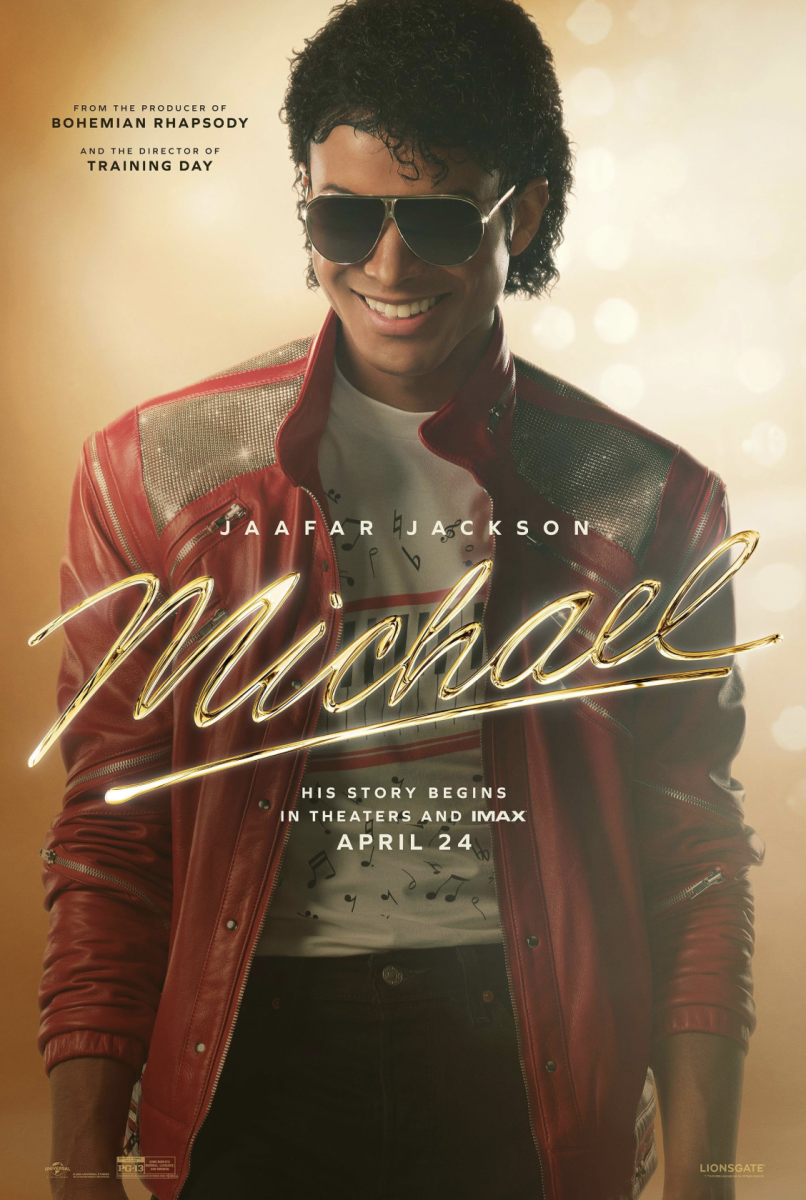
The Michael biopic follows Michael Jackson from 1966 to 1988, through the birth of The Jackson 5 to his massive solo hit, Bad. The movie amassed 217 million dollars globally in its opening weekend.
But why?
Michael Jackson’s life is an objectively intriguing topic that brings numerous questions. To name a few, why did he have a pet monkey? Why did he get plastic surgery? Were the accusations of sexual abuse true? How does he sound like that? What was his dad like?
To put it mildly, the film answers very few of these questions.
The biopic feels like a live concert, with minimal focus on the artist’s story. Instead of focusing on his personal struggles, it is simply a celebration of the music. However, that is not necessarily a bad thing.
Jackson is portrayed as an artist with a surprising leap to stardom at a young age, as the movie jumps quickly from the family living in Indiana, to The Jackson 5’s extreme popularity, to Jackson’s first solo album, Off the Wall. The film lacks details about his actual life: his personality, creativity, anxieties, and frustrations, leaving the movie a little too glossy to truly honor the King of Pop’s true story of success and later demise.
However, the film does answer at least one question: why did he get plastic surgery? The movie suggests that his desire to change his face stemmed from a deep hatred of his father, who had the same nose Jackson got rid of. The relationship between Jackson’s father, Joe Jackson, and Michael is portrayed as strained. The movie characterizes Joe Jackson as an abusive father figure who uses extreme tactics to launch the Jackson brothers into their successful careers. The film suggests that this, in turn, leads to the singer’s distance from his father and his various plastic surgeries in the years to come.
But the main focus is the music. The film contains numerous appearances of Jackson’s raw, unedited singing voice, reminding fans of the King of Pop’s pure and utter talent. Jaafar Jackson, Michael Jackson’s nephew, delivers a phenomenal performance that effectively portrays Jackson’s entire persona: his movements, mannerisms, and lip syncs capture Jackson’s stage presence.
Regardless, I do believe the movie missed the opportunity to address the massive racial barriers a young Black artist needed at that time to overcome to gain that amount of stardom. This film was a chance to show the effect this Black artist had on young people of color who already rarely saw themselves represented in mainstream media. The only time this aspect of his career was mentioned was in a short scene where Jackson’s producer forced Jackson’s new song onto MTV, when the company was refusing to promote his work due to his race.
Speaking of, the film also avoids the not-so-pretty portions of Jackson’s career starting in the 90’s. This gives the impression that the film is supposed to be a redemption of Jackson’s previously muddied reputation after the 2019 short documentary film Leaving Neverland (Dan Reed), which included interviews with those who accused Jackson of sexually abusing them.
Instead of replacing his previously broken reputation, the producers of Michael merely remind fans of how good it used to be to enjoy his music: like, Hey! Remember how you felt when you watched him on TV 40 years ago? Pretty great, huh?
And truly, the film makes people like me, who weren’t alive during his career, feel that magic.
Supposedly, the movie is to continue in a part two, detailing the second half of Jackson’s life. To complete a biopic honorably, you should be able to include the ups and the downs of that person’s life. I am looking forward to it.