Project Hail Mary: a Hail Mary to Cinema.
Following Project Hail Mary’s massive 80 million dollars on its opening weekend (March 20th), numerous people have run to social media to express their love for the film since its release. Even NASA scientists responded to astronaut updates in the Artemis II launch with a reference to the movie: “Amaze Amaze Amaze!”
Ryan Gosling signed onto the movie all the way back in 2020 following the book’s release, knowing it would be a hit. The movie feels like the long-awaited magic of cinema we were missing, with space action, tears, and a touch of dystopia.
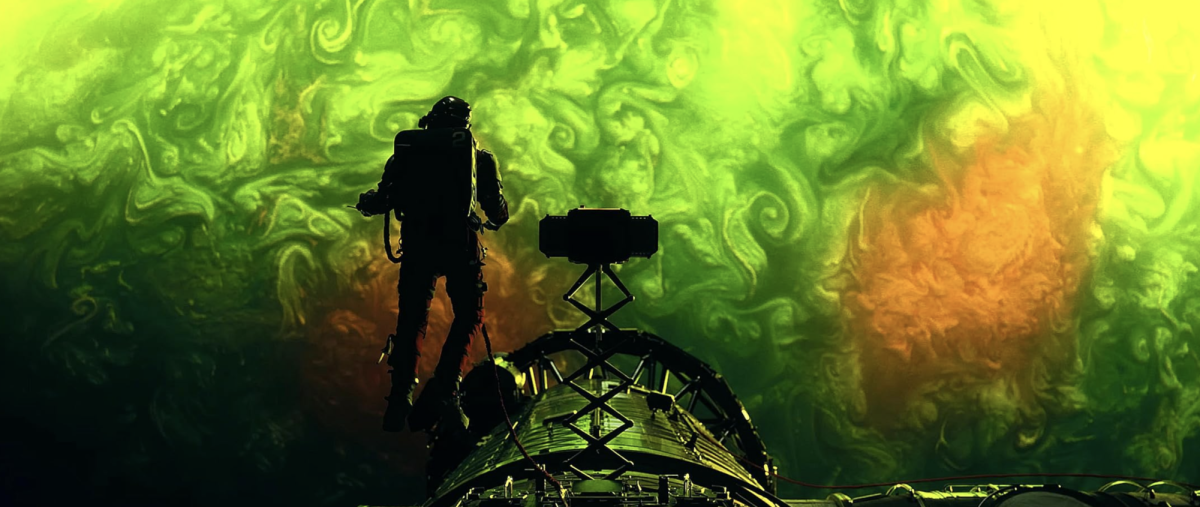
The movie is based on Andy Weir’s book, in which microscopic organisms dubbed “Astrophage” are essentially eating the sun, reducing the amount of sunlight reaching the Earth. Scientists predict an inevitable ice age that will kill half of the population within 30 years. Grace (Gosling) is forced to travel into space to find a solution that could save humanity. While in space, he becomes friends with an alien rock he dubs Rocky, a playful and energetic character going through the same thing Grace is: saving his planet.
In terms of story, it was a remarkable, tear-jerking story, illustrating that all species speak the same universal language: love, conveying the theme that it can be launched from two polar opposite beings who don’t even know how to communicate.
According to Michael Arndt, an award-winning filmmaker, what makes a story grasp tight to your list of top movies is the stakes: one external, one internal, and one philosophical. Without these, no one will watch, read, or listen to your tale. For Project Hail Mary, all of these were present. Externally: saving the planet. Internally: emotional responsibility to his space partner, Rocky. Philosophical: weighing the decision to save all of humanity versus one individual. This movie also added that special aspect of love and connection that makes moviegoers love it.
Which leads me to the score; as someone who has never understood the Oscar category Original Score – the best body of music produced for a film – this movie helped me understand, and similarly others, the reason people receive those Oscars. Daniel Pemberton created a mix of choir, orchestral, and percussive sounds to evoke a sense of hope and humanity in a space film. As Rocky is unable to speak English, the noises he uses to communicate are essential to the storytelling through sound, and Pemberton used these standout noises of Rocky to help create an extraordinarily unique soundtrack.
As for general music outside Original Score, during fun moments, they would play these really upbeat, fun songs, juxtaposed with sadder, more complex songs for deeper moments. For example, we hear Sign of the Times by Harry Styles, followed by Pata Pata by Miriam Makeba, a dance song that will certainly make you bust a few moves.
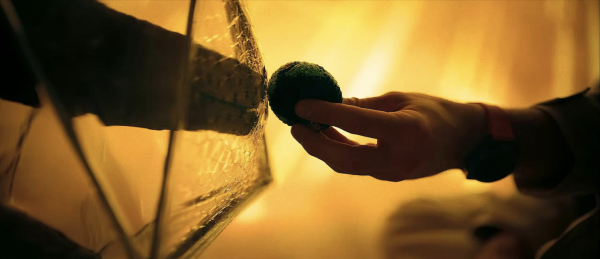
Production was incredibly well done, which is expected from a production signed into adaptation via Metro-Goldwyn-Mayer (MGM) 6 years ago. Imagining an entirely new species and world can be difficult because, as humans, we only know what we can see. The level of creativity the producers and writers were able to reach when illustrating the book is incredibly detailed and specific. One example of this is how Rocky’s ship is built entirely of reflective light and golden accents, truly immersing watchers into this world.
I have to admit, the ending was odd: almost too happy in such a stakes-driven movie. Slightly corny, but I can’t complain much with a happy ending.
The directors were able to shift a slightly daunting book into a heartwarming story, exhibiting Gosling’s range and passion for an extraordinary story. Shifting from Ken (Barbie, 2023) to a sarcastic school teacher trying to save the planet: what can’t he do?