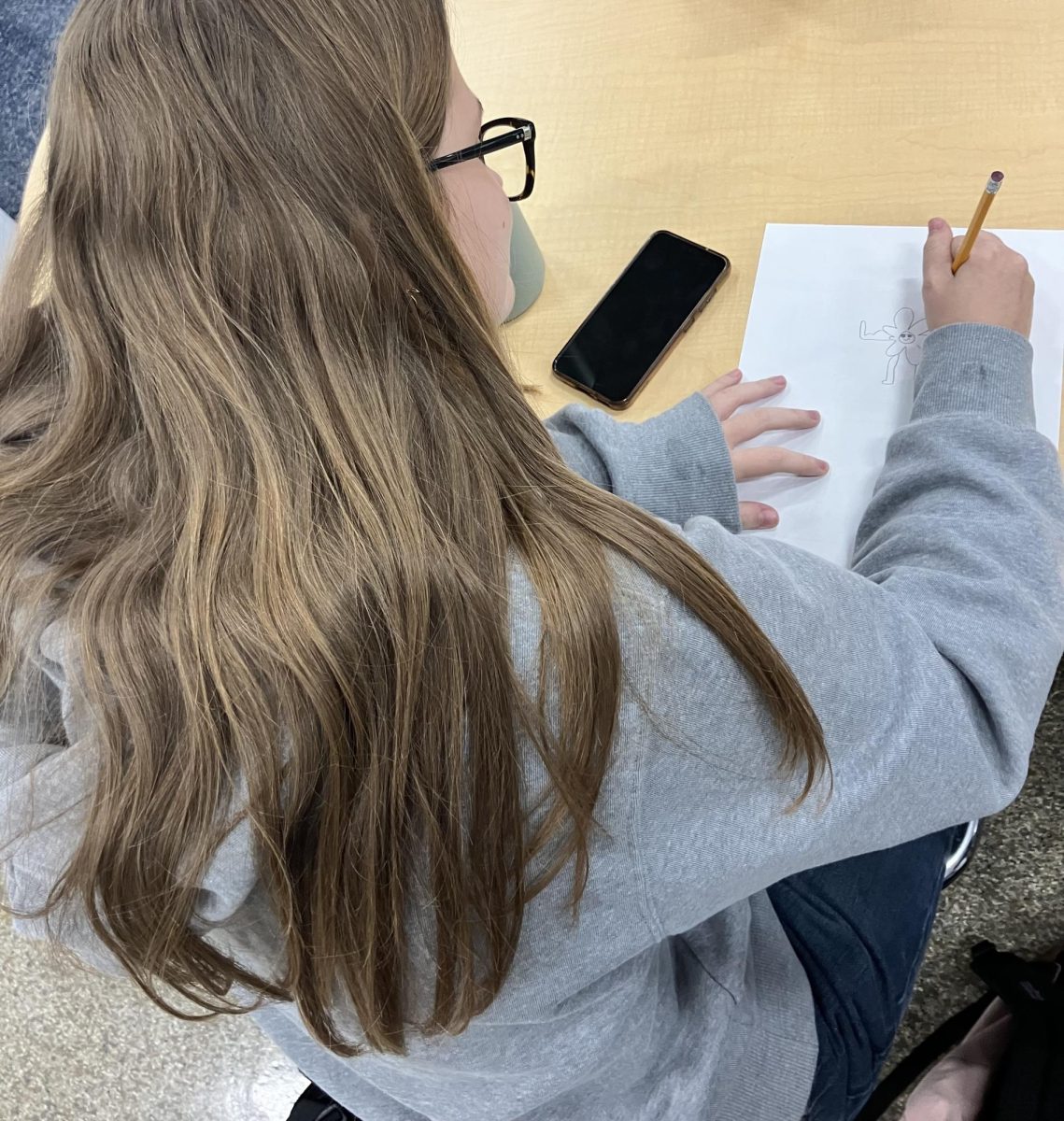
Art is a form of self expression, individuality, and creativity. It can be both a job and a passion. Artificial Intelligence (AI) is a stirring debate about AI’s place in art: does it belong or not?
A frequent question is how AI actually makes art. AI art is completely dependent on real art. It analyzes existing images then using pattern recognition, applies this data into generating images. This in itself is a form of plagiarism.
Artists such as Ani Chien (‘29) feel exploited by AI because their years of practice mastering the craft can be copied in seconds: “It also takes the wonder and awe of art away, because there is something special about knowing someone actually put so much time and energy into making something.”
Many Skyline artists believe that artificial intelligence will threaten the future of the art community. “If we have AI to just constantly pump out this art…people will stop seeing the value in true human-made art,” says student painter Sydney Barlow (‘29).
Artists rely on their work for income and recognition. AI art can affect art competitions and commissions: using AI for profit harms artists. Chien notes that “AI can damage the lives of artists using their skill to make a living.”
On the other side of the debate, many people believe that AI is good for the art community, as it can be used as a reference when creating art. “AI can be a useful tool for sparking the creative process,” says Photography and Graphic Design teacher Meredith Glitner. “For someone experiencing creative block, AI can provide a starting point or a way to brainstorm ideas visually.
A good skillset to have is being able to differentiate art made by Artificial Intelligence from human-made art. Therefore, knowing the differences between AI art and human made art is crucial.
“When I see an image and I presume that it is AI or I have any speculations, the thing that I look for are extra fingers, because, you know, fingers are an intricate, very detailed, part of the human body,” says Barlow “that’s just not something a real photograph would have.”
So how do art teachers distinguish whether a student used AI to complete an assignment? “In my Photography classes, I review students’ work directly from their phone camera rolls and observe their editing process,” says Glitner. “In Graphic Design, students sketch out their concepts in class before moving to digital formats.”
Teachers feel that by having engaging and relevant lessons, students will be less encouraged to use AI in their assignments.