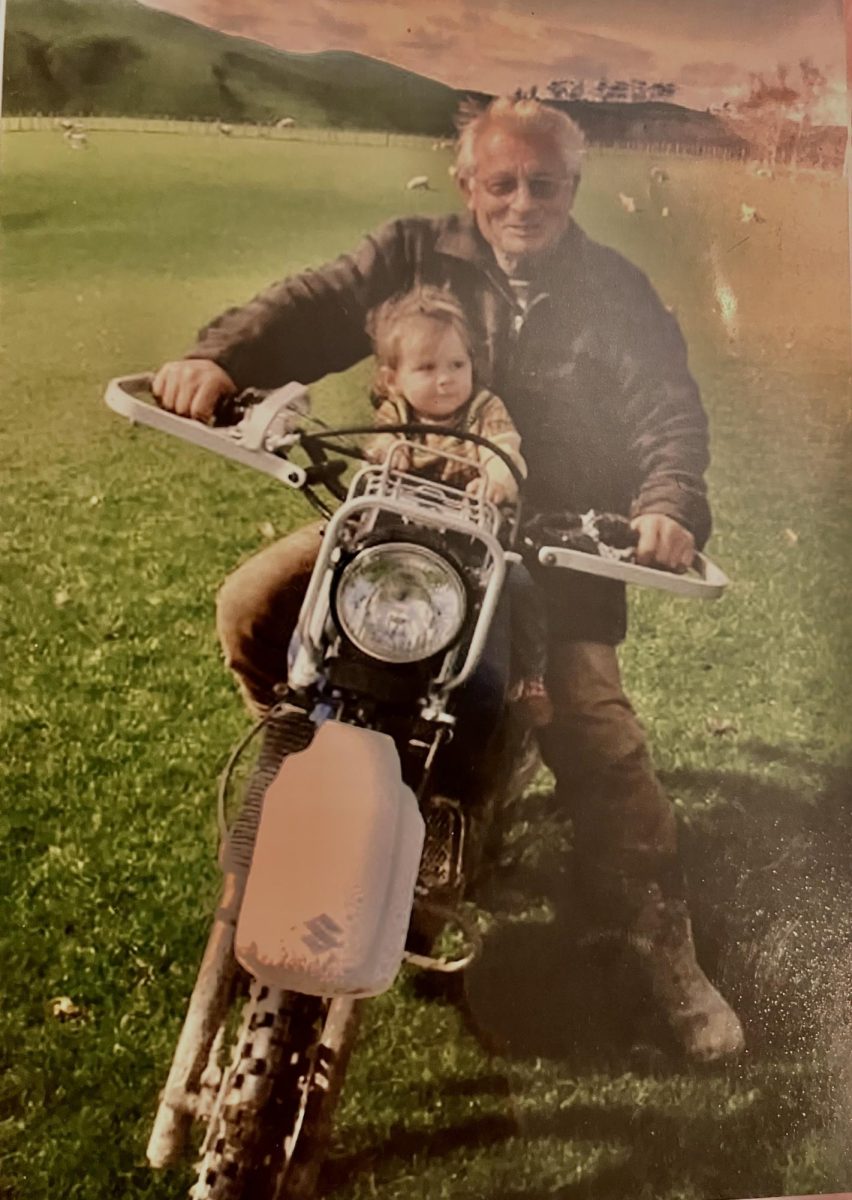
My roots are in New Zealand Aotearoa. My mother is from Aotearoa, so are my grandparents and their grandparents. My family has six generations that have lived in Aotearoa. Everything that I didn’t learn in school, I learned from my grandparents when visiting: how to sew, how to embroider, how to grow tomatoes, how to raise lambs.
Aotearoa moves a lot slower than America; there aren’t as many ladders to climb or new opportunities to take. However, there is a deep sense of community. With that community comes a responsibility to protect the small amount of land we have. Everything is handgrown, handmade, and reused.
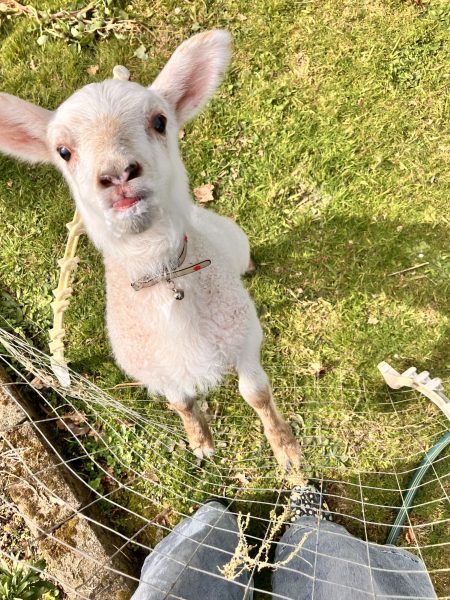
If there’s a hole in your jeans, you patch it. If you need ingredients for dinner, you go to the vegetable garden. You burn your own trash, while the rest is recycled. You don’t have dishwashers; you wash dishes manually. You don’t use the clothes dryer; you use the sun to dry your clothes. We raise pet sheep for wool: shearing, carding and then spinning their wool to make blankets, scarves, and sweaters.
When I was in America, none of these skills mattered. When you “recycle” it goes to the same landfill as your trash, your clothes fall apart before you can mend them, there is no room on your monocrop grass lawn for a vegetable garden.
When I started middle school, I had to stop visiting Aotearoa due to COVID-19; the only way I could talk to my family was through a screen. But, when I turned my attention to socializing in school, I found I no longer fit into the mold of an American. Despite looking like an American and speaking like an American, I was singled out for the smallest things. From the way I pronounced words to the “granny” skills I’d learned. I thought if I completely cut out my grandparents and that side of my identity, I wouldn’t stand out. I thought if I lied about where I was from and changed my clothing, I would fit into middle school.
It never worked. I went into high school as someone I no longer recognized, trying so hard to be someone I’m not. That’s when the travel bans due to COVID-19 were lifted, and I could visit my home again.
Going home helped me realize where all my “faults” had come from: I wasn’t messed up, but unique in my own way. I didn’t need to be a perfect “American” to “fit in.” Instead, I needed to embrace who I am: my dual nationality, the languages I’ve learned, the skills I’ve picked up. The uniqueness of my circumstances has become my strongest attribute. I am never going to be able to change where I come from, nor what I’ve experienced, only how I look at myself.